

How to Build Messaging That Connects and Converts
Listen to your audience, focus on clarity, and test to see what works.
It’s the messaging. That’s what’s getting in your way.
In a 2024 survey, 51% of B2B buyers said vendor content felt too generic or irrelevant. When over half your audience doesn’t ‘get’ you, that’s a significant problem.
Messaging is how I make value clear. It’s how I connect what I do to what people care about. And when it’s off, everything else drags, including engagement, trust, conversions, and growth.
Here’s how I approach fixing that and how I test whether the message is doing its job.

What Is Brand Messaging?
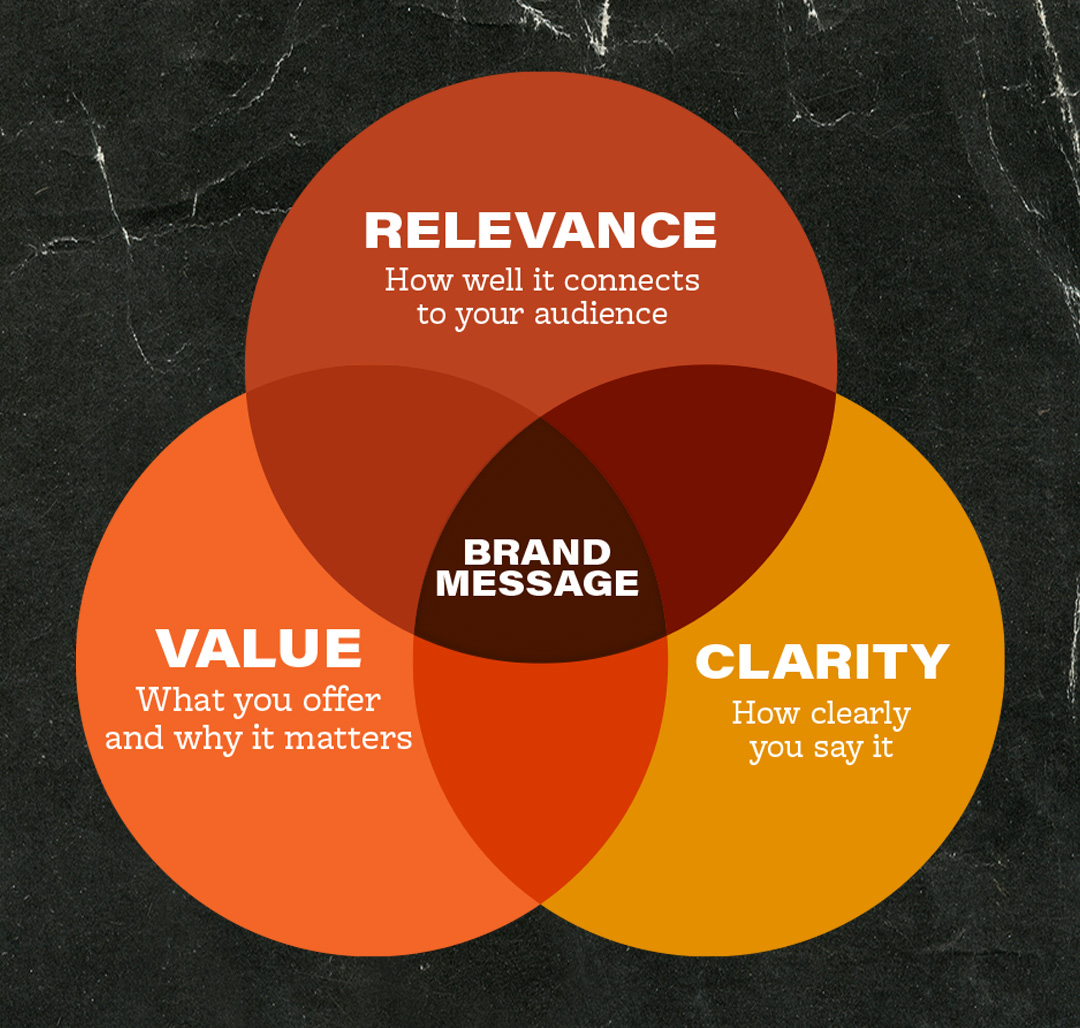
Brand messaging is the language I use to communicate value to the people I’m trying to reach. It’s the story I’m telling, and when it’s done right, it covers what I do, who it’s for, why it matters, and how consistently and clearly that shows up across every touchpoint.
Messaging isn’t the same as copywriting. Copy is execution, while messaging is direction. It shapes how I talk about a product or service. Not just the words, but the intent behind them.
And it’s not positioning either. Positioning is where I sit in the market. Messaging is how I express that position, so people get it. When it’s working, the right people read it and go, “That’s exactly what I need.”
Why Most Brand Messaging Fails
Most messaging fails because it’s built from the inside out without pressure-testing how it lands with real people. I’ve seen it fall apart in the same five ways, over and over:
- Vague Language: Soft claims, buzzwords, and generic phrasing that don’t say anything.
- Me‑First Positioning: Focusing on what the company wants to say instead of what the audience needs to hear.
- Inconsistent Tone: Shifting voice or style across web, email, ads, and sales decks dilutes brand identity.
- Overloaded Messaging: Trying to communicate every possible benefit at once instead of sticking to one clear message.
- No Proof: Bold claims without data, testimonials, or real-world examples don’t build trust.
Let’s jump on the nostalgia train for a moment so I can show, not tell, what I’m talking about.
Coca‑Cola’s 1985 launch of New Coke is an iconic lesson in what happens when messaging misfires. Despite consumer taste tests favoring the new formula, Coke got massive pushback because the launch erased the familiar identity people trusted, which they’d associated with “the real thing.” Public outrage was so intense that Coke reintroduced the original formula just three months later.
The messaging failed because it was completely disconnected from the emotional relationship consumers had with the brand, not because of flavor or quality.
The 5 Elements of an Effective Message
When I’m building or refining brand messaging, these are the five elements I always start with. If even one is missing, the whole thing starts to wobble.
-
Clarity
– If people can’t tell what you do in five seconds, they’re gone. I aim for plain language, without fluff, buzzwords, or self-serving cleverness. Don’t write. We deliver next-gen customer-centric solutions for the digital enterprise. What does that even mean? We help B2B brands fix their messaging so buyers get it.
-
Relevance
– Even if the message is clear, it still has to matter. I always ask: does this speak to what my audience cares about? Not what I think is cool. Not what my boss wants to highlight. What they need to hear, in their words, at their stage of the journey.
-
Differentiation
– You can’t just say what you do. You have to show how you’re different. When everyone in the category is saying “trusted partner” or “full-service agency,” none of it sticks. I look for specifics like process, point of view, structure, values; anything that makes the offer feel like it couldn’t have come from anyone else.
-
Proof
– Claims without evidence are just noise. I always hunt for ways to back things up. Real evidence like results, quotes, metrics, or even a quick “we’ve done this for brands like X.” It doesn’t have to be a formal case study, just examples of the work you’ve done.
-
Consistency
– Messaging isn’t just a homepage problem. It’s an everything problem. I examine how it’s showing up in emails, ads, social captions, pitch decks, outbound scripts, anywhere language plays a role. When the tone and message shift too much, the whole brand feels shaky.

How I Craft a Messaging Strategy That Works
There’s no single template for great messaging, but this is the process I follow every time. It keeps the message grounded in reality, aligned across teams, and built to evolve.
-
Define the Core Audience
– I start by getting super clear on who I’m talking to. Not just “enterprise buyers” or “small business owners,” but real segments with real needs, roles, and buying triggers. Messaging that tries to reach everyone ends up hitting no one.
-
Talk to Actual Customers
– Surveys are fine, but I get way more insight from direct conversations. I listen for the language they use, the pain points they repeat, and the moments that make them say yes or almost walk away.
-
Map Features to Outcomes
– Features are what a product does. Outcomes are what the customer gets. I map every feature to a specific benefit or business result. That translation step is what turns specs into selling points.
-
Build a Message Hierarchy
– I sketch out the core structure: headline → subhead → support. That top-level message needs to land fast. Everything underneath reinforces and expands without derailing the clarity.
-
Test Messages in the Wild
– Before I lock anything down, I run real-world tests like subject lines in emails, headlines on landing pages, or paid ad copy. I look at what gets clicks, what holds attention, and what converts. Sometimes I use tools like Wynter to get fast, targeted feedback from the right audience. Other times, I’ll run my A/B tests and watch what resonates. Either way, the message earns its place before it gets rolled out.
-
Document the Messaging Guide
– Once things are working, I write it down. Core messages, voice traits, sample copy, do/don’t examples. It doesn’t have to be a detailed manifesto, just usable.
-
Loop in Other Teams
– Marketing can’t carry messaging alone. I bring in sales, customer success, product—whoever’s talking to customers—to ensure everyone’s speaking the same language. That alignment pays off fast.
-
Revisit and Refine
– Messaging isn’t a one-and-done. I revisit it quarterly, especially after product launches, market shifts, or customer feedback. If it stops working, I update it instead of trying to force old messaging into a new idea.
Frameworks I Use to Build Better Messaging
When I need to sharpen a message or break through writer’s block, these are the frameworks I turn to. They help me see the message from the buyer’s perspective and stay focused on what matters.
-
Jobs To Be Done (JTBD)
This one’s all about understanding why someone buys. Not just what they need, but the job they’re trying to get done. I ask questions like:
- What triggered their search for a solution?
- What would success look like for them?
- What are they trying to avoid?
Framing your messaging around the job, not the product, makes it more relevant and more human.
-
Value Proposition Canvas
I use this when I need to connect product features to real customer outcomes. It helps me align what I offer with what the audience cares about by mapping pains, gains, and expectations to benefits and differentiators. It’s especially helpful for B2B teams that tend to lead with features instead of outcomes.
-
Before–After–Bridge
This one’s simple and it works:
- Before: what life looks like now
- After: what it could look like
- Bridge: how the product or service gets them there
It’s a great gut-check for whether the message communicates value. If I can’t fill in those blanks in one sentence each, I probably don’t have a clear message yet.
-
PAS (Problem, Agitation, Solution)
Old school, still effective. I start with the problem, turn up the stakes (agitation), then introduce the solution. It works well for cold outreach and landing pages, or anywhere I need to hook attention fast and guide someone toward action.

Messaging in Action: Real B2B Fixes
I’ve rewritten a lot of messaging over the years, and the most significant shift usually comes down to clarity, tone, and giving the reader something they can latch onto. To show you what that looks like in practice, here are five quick before-and-afters across different industries.
SaaS: Productivity Platform
Before:
“A centralized solution empowering teams to collaborate efficiently and drive cross-functional success.”
After:
“One platform to manage projects, share files, and move faster together.”
We swapped the corporate filler for plain, purposeful language. It made the benefits feel real and not like theoretical slop.
Services: B2B Marketing Agency
Before:
“We deliver strategic marketing initiatives that accelerate brand performance across the funnel.”
After:
“We help B2B brands tighten their message so the right people pay attention.”
We led with value, dropped the buzzwords, and focused on clarity that cuts through. You know, the stuff clients need.
Logistics: Freight Management
Before:
“Optimized transport solutions for maximum efficiency and visibility at scale.”
After:
“Reliable freight shipping with real-time tracking and zero guesswork.”
More specific, more useful, and more trust-building. That’s what this rewrite did in a single sentence.
Manufacturing: Industrial Equipment Supplier
Before:
“Providing cutting-edge technology for end-to-end operational productivity.”
After:
“Machinery built to keep production running, not breaking down.”
We focused on what is always a big worry for operators: downtime. Then, we made the value unmistakable.
Fintech: Payment Solutions
Before:
“A flexible platform to streamline transaction processing and enhance customer satisfaction.”
After:
“Send invoices, take payments, and get paid without chasing anyone.”
The original was like trying to recite theory with a mouth full of marbles. The rewrite is a promise delivered in real talk.
Want to see what a messaging refresh could do for your brand?
FAQs About Effective Messaging
How do I know if my messaging is working?
If the right people are stopping, nodding, and reaching out, it’s working. I look at click-throughs, conversions, time on page, demo requests, and replies to outbound, but I also listen for how often prospects repeat back the message unprompted.
How often should I update my messaging?
I revisit it quarterly. Not because it always needs a complete rewrite, but because many factors shift, including audience expectations, product features, the market, and the competition.
Should messaging be different across marketing and sales?
No, but it should flex. The core message should remain the same, but its presentation can evolve based on someone’s journey. I write marketing copy to capture attention, and sales copy to hold it, but they should feel like they came from the same brain.
What’s the difference between messaging and positioning?
Positioning is where you sit in the market. Messaging is how you say it out loud. Positioning helps me decide what to emphasize, while messaging is the language I use to make it land.
How do I make a compelling message?
I start with three questions: Who am I talking to? What do they care about? And how does what I’m offering solve something real for them? Then I build from there with clarity, relevance, and proof. If I can answer all three without guessing, I know I’m on the right track.
What determines a message’s effectiveness?
The audience does. I don’t go by how clever it sounds in a brainstorm, but by whether it moves people to act, if it’s remembered, repeated, or responded to.
How to message effectively?
Say the right thing to the right people in a way that makes sense to them, not to your team, not to your C-suite, and not to your internal thesaurus. Talk like a human, start with truth, and cut the filler.
Final Thoughts: Messaging Is a Practice, Not a Tagline
We all love a good brainstorm (do we?), but that’s not where good messaging comes from. It comes from the world outside your brain, in the form of real conversations, tight feedback loops, and teams that know how to work language into something sharp and usable.
Everything I’ve laid out here—clarity, relevance, proof, alignment—it only works when it’s part of the day-to-day and not a one-off. Messaging needs forward momentum, rather than languish as a static deck in a folder.
If yours feels flat or scattered, start with an audit. Pull up what you’re putting into the world and read it like a customer. If it doesn’t click fast, it’s time to fix it.
Is your messaging hitting the target? Get in touch, let’s find out together.


Get A Personality Already: Is Your Company Voiceless?
Most companies lack a unique voice because they never define one, document it, or use it consistently across channels.
If every tech reseller scrubbed their name off their website, most of them would be indistinguishable. Same site structure. Same stock phrases. Same tone that reads like it was siphoned through a help desk script and a compliance checklist.
That’s because most companies—especially in the tech channel—treat brand voice like a garnish. A decorative sprinkle of (mostly generic) tone layered on after the fact.
But tone can’t be an afterthought.
It’s the one part of your messaging that can make people feel something before they buy. And in a market where everyone’s competing on specs, discounts, and a “deep engineering bench,” emotional resonance is one of the last real tools you’ve got to stand out.
This is how to find your voice and use it everywhere, from subject lines to support tickets, without losing your signal in the noise.
What Is Brand Tone of Voice?
Brand tone of voice is the way your company sounds across every touchpoint, whether that’s written, spoken, digital, or physical. It’s the clear, consistent personality behind the words that’s aligned with your core values and tells someone they’re hearing from you, even if your logo isn’t in the corner.
A strong brand voice reflects what you stand for, how you want to be perceived, and what kind of connection you’re trying to build with your audience. And when it’s done right, it doesn’t feel like a performance. It feels like a conversation that only your brand could have.
Why Your Tone of Voice Matters
A consistent, authentic tone of voice reinforces what makes your brand worth listening to in the first place. It turns everyday communication into something that moves people.
Enhance Customer Experience and Engagement
People buy products, but more than that, they buy interactions, impressions, and moments. The right tone can make even the most routine touchpoint feel like part of a bigger relationship. It signals that your brand knows who it’s speaking to and that you’re not just talking at them.
Build Recognition, Trust & Loyalty
When your voice is consistent across platforms and teams, it becomes recognizable. Trust builds from that repetition. Loyalty follows from resonance. Your audience starts to know what to expect, and they’ll lean in if what they hear feels grounded and human.
Differentiate Your Brand from Competitors
In the tech channel, especially, differentiation is a constant battle. Product specs can be copied, and prices fluctuate. But your voice is proprietary. When it reflects your values, fits your audience, and doesn’t sound like a warmed-over whitepaper, it becomes one of your most defensible assets.
The 12 Brand Archetypes
If tone of voice is how your brand speaks, then archetype is the role it plays in the story.
The 12 brand archetypes are personality blueprints. They help define the emotional territory your brand occupies. When used well, they bring clarity, consistency, and cohesion to every message. These archetypes give your voice an identity, something deeper to draw from than just adjectives.
Here’s a quick look at all 12, with familiar brand examples that live them well:

-
The Hero
– Bold, determined, purpose-driven (Nike)
-
The Magician
– Visionary, transformative, awe-inspiring (Disney)
-
The Sage
– Wise, analytical, truth-seeking (Google)
-
The Innocent
– Optimistic, pure, feel-good (Dove)
-
The Explorer
– Adventurous, independent, curious (The North Face)
-
The Creator
– Imaginative, expressive, original (Adobe)
-
The Outlaw
– Disruptive, bold, nonconformist (Harley-Davidson)
-
The Lover
– Passionate, emotional, indulgent (Chanel)
-
The Jester
– Playful, irreverent, funny (Old Spice)
-
The Everyman
– Friendly, relatable, grounded (IKEA)
-
The Caregiver
– Nurturing, warm, selfless (Johns Hopkins Medicine)
-
The Ruler
– Authoritative, structured, responsible (Rolex)
These archetypes are merely starting points, not boxy templates. Choosing the right one gives your tone boundaries and intent. So instead of chasing trends or trying to sound like whoever’s winning the algorithm this week, you sound like yourself.
Key Elements of an Effective Brand Tone
Once you’ve defined your brand’s archetype, you need a tone that supports it and sounds intentional across the board. These five characteristics are the foundation. They keep your voice aligned, recognizable, and ready to work across the entire customer journey.
Authenticity
People can spot a forced tone from a mile away. When your voice reflects your actual values, not just what’s trending, it builds credibility. Authentic tone doesn’t try too hard. It speaks from a place of truth, and that’s what makes it land.
Consistency
Your voice should be consistent, whether someone is reading your website footer or a sales pitch deck. Not identical in wording, but consistent in feel. That consistency reinforces your identity over time and makes you more trustworthy.
Clarity
No brand ever lost a customer for being too easy to understand. A clear tone of voice conveys the message directly, without unnecessary jargon or clutter. It respects the reader’s time and never leaves them wondering what you meant to say. People trust clarity. As I say (probably too often), clarity is kindness.
Resonance (Emotional Connection)
Tone isn’t just about how you sound—it’s about how you make people feel. When your voice resonates, it creates moments that stick and connect while it informs.
Versatility (Adaptability Across Contexts)
Strong tone travels well. It flexes across platforms without losing its shape. Versatility is what keeps your voice steady without becoming stale.
A Step-by-Step Guide to Developing Your Brand Voice
You don’t need to reinvent your company to find its voice. You just need to surface what’s already there and shape it into something consistent, usable, and real. This framework provides a clear path.
-
Pinpoint Your Core Values
Start with what you believe in—not the sanitized version written for pitch decks, but the principles that guide how you operate, hire, sell, and show up. Core values are the internal priorities that shape your company’s behavior. These values become the backbone of your voice, helping it stay grounded and aligned across every message.
-
Understand Your Audience
The best brand voices reflect who you are and who you’re talking to. Build out real audience personas. Get clear on their needs, language, expectations, and emotional drivers. If your tone doesn’t meet them where they are, it won’t matter how well-crafted it is.
-
Audit Existing Communications
Take inventory of what you’re putting into the world—emails, ads, landing pages, support replies. Where does your tone come across strongly? Where does it fall apart? This step helps you identify gaps and inconsistencies that need cleaning up before anything new gets rolled out.
-
Define Voice Characteristics & Tone
Use what you’ve learned so far to create a set of tone traits (e.g., “direct,” “helpful,” “approachable”) that support your brand’s archetype and values. Then add nuance: how do those traits flex in different scenarios? Friendly doesn’t always mean casual. Confident doesn’t mean loud.
-
Document a Tone-of-Voice Style Guide
Put it all in writing. Your tone guide should be concise, clear, and actionable—something anyone, from a designer to a support representative, can use. Include voice traits, do/don’t examples, and notes on how tone shifts across contexts.
-
Train Your Team & Implement Across Channels
A tone guide doesn’t work unless people use it. Walk teams through it. Build it into onboarding. Reference it during reviews. Most importantly, apply it everywhere—from your hero banner copy to your out-of-office replies. That’s how a voice becomes real.

Brand Tone of Voice Examples & Inspiration
Here are five standout tones that demonstrate how personality, values, and audience converge to create something distinct and lasting.
Playful & Encouraging — Duolingo
Duolingo has built its brand on lighthearted pressure. It mixes humor with gentle nudges, using a tone that’s fun, slightly chaotic, and always supportive. Whether it’s a push notification from the owl or a social post nudging you back to your lesson, the voice is unmistakably casual, confident, and geared toward progress without punishment.
Bold & Motivational — Nike
Nike’s tone is pure drive. It speaks in sharp, focused statements that rally individual empowerment. From “Just Do It” to campaigns like “You Can’t Stop Us,” Nike’s voice is declarative, high-energy, purposeful, and designed to hit people emotionally and physically.
Approachable & Quirky — Mailchimp
Mailchimp sounds like your friendly, clever coworker who’s good at explaining complicated stuff without making you feel dumb. The tone is casual but smart, with bits of oddball humor baked into everything from onboarding emails to product tooltips. It strikes a balance between creative and clear, especially when helping small businesses get started.
Professional & Inclusive — LinkedIn
LinkedIn maintains a polished, respectful tone across the board, but it’s not stiff. It communicates with confidence and clarity, using language that aims to include professionals across industries, roles, and backgrounds. The voice remains focused on connection, opportunity, and community, without overusing corporate jargon.
Humorous & Light — Old Spice
Old Spice leans hard into absurdity—and it works. From surreal ad campaigns to deadpan product descriptions, the voice is confident, weird, and self-aware. It pokes fun without alienating, using humor as a strategy to disrupt the category and stay top of mind with younger audiences.
Applying Voice Across Channels
Once your tone of voice is defined, the real work begins. Tone is useless when it languishes in a brand guide. It has to show up across every channel where your brand communicates. That means adjusting for format, not personality. A great voice adapts without losing its core.
Here’s how to apply tone of voice consistently and with intent across key channels.
Website
Your website sets the tone for everything else. It’s where your voice gets its first full test. If your homepage sounds friendly but your product pages read like a legal disclaimer, the inconsistency undercuts trust.
How to apply tone here:
- Write headlines that reflect your brand’s personality, not just your offerings.
- Use microcopy (form labels, CTAs) as small but powerful moments to reinforce tone.
- Match tone to layout. A voice that’s casual and fast-paced doesn’t belong in dense paragraph blocks.
A direct, confident tone might turn a generic CTA like “Learn More” into “See It in Action.” A more playful brand might go with “Let’s Do This.”
Social Media
Tone lives or dies on social. This is where brands either go flat or find their rhythm. Your voice needs to adapt to the format—shorter, quicker, more visual—but it still has to feel like you (mostly; there’s also a time and a place to veer hard from a defined voice on social — don’t fear appearing unhinged).
How to apply tone here:
- Define guardrails. What types of humor, slang, or trends are off-brand?
- Create content formats that naturally fit your tone (e.g., polls for casual brands, thought leadership snippets for authoritative voices).
- Carry tone into engagement, not just posts; replies, DMs, and comments matter.
Instead of replying “Thanks for the feedback,” a brand with a more human tone might say: “Really appreciate you flagging this—we’re on it.”
Email is where tone builds relationships. It’s often the most personal and direct line to your audience, so voice matters more than ever here.
How to apply tone here:
- Don’t separate marketing from transactional. Your voice should carry through everything from a promo blast to a shipping update.
- Subject lines and preview text should reflect the same tone you use in body copy.
- Rewrite default CRM text in your brand’s language—automated doesn’t have to mean generic.
Instead of “Your order has shipped,” a warm and witty brand might say: “It’s on the way! Someone’s about to have a good day.”
Customer Support
This is often the blind spot for brand voice. If you’ve taken the time to develop a clear tone, it should show up in how you solve problems, not just how you promote products.
How to apply tone here:
- Build tone training into support onboarding. Not just customer service etiquette, but language use.
- Develop response templates that reflect tone while leaving room for personalization.
- Define tone shifts for high-stress situations. How does your voice sound when apologizing, clarifying, or escalating?
A professional but approachable brand might say: “We’re sorry this didn’t meet expectations—let’s make it right.” That feels more human than “We apologize for the inconvenience.”
Advertising
Your ad voice is your public voice at scale. It needs to communicate value and urgency without sounding like an algorithm wrote it.
How to apply tone here:
- Lead with tone, not just calls to action. Start by writing ads the way your brand talks.
- Don’t try to be witty if your brand isn’t. But don’t default to robotic either.
- Use tone strategically in A/B tests to see what resonates while staying true to your identity.
Instead of “20% Off All Products,” a bolder tone might say: “Your gear upgrade just got cheaper.”
Bottom line: A brand voice that only works on the homepage is a style choice, not an authentic voice. A genuine tone is evident in every message, every format, and every interaction. If your voice holds steady while your channels shift, that’s when customers start recognizing it without any visual clues.
Dos & Don’ts for Your Brand Tone
Below are some practical dos and don’ts to keep your brand voice on track, along with a few examples of what happens when it goes off track.

Dos
Be clear.
Even the smartest voice falls flat if it’s hard to follow. Prioritize clarity over cleverness, especially in areas where users need to take action (CTAs, onboarding flows, error messages).
Be audience-focused.
Write for your reader, not your stakeholders. If your tone doesn’t reflect how your audience speaks—or wants to be spoken to—it’s just noise.
Be warm (or real, or bold—whatever fits your brand).
Your tone should have a personality, but it doesn’t need to perform. A confident brand doesn’t need to shout. A helpful brand doesn’t need to sound like a call center rep. Stay human.
Be consistent.
If your homepage sounds casual and your support documents read like they were ghostwritten by a lawyer, something’s off. Consistency builds trust.
Be adaptable.
Your tone can flex without breaking. A good voice knows how to shift gears between a product announcement and an apology email without sounding like two different companies.
Don’ts
Don’t over-jargon.
Industry terms are acceptable. Buzzword soup is not. If your sentence needs three acronyms and two hyphens to explain a benefit, rewrite it.
Wrong: “Leverage cross-functional synergies to accelerate scalable outcomes.”
Better: “Work better together—faster.”
Don’t fake humor.
If your brand isn’t funny, don’t force it. Awkward jokes or try-hard one-liners erode trust faster than silence.
Wrong: “Oopsie daisy! Looks like something went kablooey. 😜”
Better: “Something went wrong—we’re on it.”
Don’t write like a terms and conditions page.
Default legal-speak kills tone. You can be compliant and human.
Wrong: “We are not liable for delays caused by third-party service interruptions.”
Better: “Shipping delays? We’ll keep you posted—and make it right if anything goes off track.”
Don’t assume tone is just a marketing thing.
Your voice should show up in every department—product, sales, support, and HR. A disconnected tone represents a missed opportunity to reinforce your identity.
Measuring & Maintaining Consistency
Staying consistent with your voice over time takes regular check-ins, real metrics, and a willingness to adapt when things drift.
Monitor Engagement & Brand Sentiment
If your tone is landing, you’ll see it in the way people respond. Observe how your audience engages with your content. Not just in clicks, but comments, replies, reviews, and brand mentions. Track what kind of tone drives interaction and where it might be missing the mark.
- Use social listening tools to gauge sentiment across channels (we love Sprout Social for this)
- Watch for tone disconnects between high-performing and low-performing content
- Include tone feedback in user surveys and post-purchase reviews
If your audience starts sounding more like your brand than your team does, you’re doing it right.
Refresh Existing Content to Align with Your Voice
Regular content audits should include a tone check. Does this still sound like us? If not, update the language to match your current voice.
- Prioritize high-traffic pages and evergreen assets
- Flag inconsistencies during product or campaign launches
- Build tone updates into your QA process, not just grammar or SEO checks
Voice consistency is about future output, not just fixing what’s already out there.
Where to Take Your Brand Voice From Here
A defined tone of voice makes you easier to trust, easier to remember, and harder to compete with. It sharpens every message, on every platform, for every audience.
But getting your voice right is only half the job. The rest is putting it to work.
Next Steps That Move the Needle:
- Audit your existing content. What still sounds like you? What doesn’t? Start there.
- Build or revisit your tone guide. Don’t just list traits; include examples, use cases, and clear guidance for each team.
- Roll it out cross-functionally. Voice isn’t marketing’s responsibility alone. Bring in product, sales, support, HR—anywhere communication happens.
- Train your team. Host tone workshops and create quick-reference tools. Make your voice easy to use, not just easy to admire.
- Measure what matters. Track how tone affects engagement, conversions, and sentiment. Treat it like any other growth lever.
When your brand sounds unmistakable, everything else gets easier: selling, scaling, growing. So take the next step. Pump up the volume.
Ready to turn this into something your team can actually use? Grab our free worksheet to define your tone, shape your brand personality, and apply it across your site, emails, and more.

8 Stellar Tips on Writing for SEO
We here at 4B have discovered the cheat code to winning some real ROI and it is this:
UP, UP, DOWN, DOWN, LEFT, RIGHT, LEFT, RIGHT, BE, A, GREAT SEO CONTENT WRITER!

When it comes to any content on your site, we can’t stress it enough: writing for SEO is crucial for success! Whether someone is looking for a new cafe, or craft brewery, or culturally appropriated taco truck, they will almost ALWAYS start with a Google search.
As we mentioned earlier in our blog on what SEO is, you MUST create for users and not just search engines.
This is actually a pretty big challenge for most companies, which is why we have come up with a list of tips that will help you improve your content!
Now, before we go any further, we understand that there are two types of people who are reading this blog right now:
- Someone who is looking for tips on becoming a successful copywriter
- Someone who is far too busy running their business to develop new content, but is wise enough to know that they will benefit IMMENSELY from great SEO copywriting…in which case, let me refer you to our copywriting services page.
For those of you looking to become copywriting gurus, are you ready to start creating impeccable SEO content that will lead to conversions? Of COURSE you are, otherwise, you wouldn’t have clicked on my tempting headline!
Tips For Writing For SEO
SEO Is ALL About The Audience:
Create content for users, not just search engines! Write with the user’s intent in mind!
Sure, this seems like a given, but so many businesses continually fail to write to humans or to humans who are outside their organization…you know, those people that you WANT to be your next client or customer! Answer the questions they’re asking and connect with your audience.
Remember that if you are writing to please an AI or algorithm, you will be missing the end for the means, because the end should be a human reading and finding value in your writing.
Likewise, there’s going to be limited value in talking about product or service features. We get it – you want your blog to be a sales tool – but there are reasons salespeople have a smile on their faces, take you out to lunch at a nice restaurant, and defer conversations about the nuts and bolts. They want you to enjoy yourself and find value in their presence first and foremost. Make sure your writing is doing the same.
Make Headlines That Pop:
Your headline is the initial call to action and it is designed to capture your audience’s attention. It is what entices people to click, and no doubt, the very headline of this blog was optimized to your queries. (Yes, research is a part of this. More about this in a moment.)
Headlines with power words and numbers tend to get more shares on social media, and headlines that answer the “who, what, why, how, and when” to user questions will always benefit immensely.
Super business advertising tycoon David Ogilvy once said, “When you have written your headline, you have spent 80 cents out of your dollar.” Something to keep in mind when coming up with that title!
If you are struggling with that headline, ask ChatGPT to brainstorm a few title ideas to get you started.
Use Keyword-Rich Phrases:
All successful SEO content writing starts with one thing…keyword research. This is how you will determine the most relevant topics and keywords for your business.
Once you have determined your relevant, targeted keywords, start peppering them into your copy as well as your titles, meta descriptions, and headings (always have an H1!)
Whatever you do, DO NOT stuff keywords (don’t cram a ton of keywords in an attempt to manipulate site rankings in Google search)! Search engines could penalize you, even by removing your site from search engine results pages altogether. PLUS keyword stuffing can create an unpleasant experience for your audience as a whole.
Some tools to help you with keyword research:
- Google Ad Words (keyword research)
- Moz.com
- SEMrush
- Ahrefs
- Ubersuggest
- Answer The Public
- BuzzSumo.com
- Google Search (yup, simply mining content ideas on Google search works)
Ensure Your Page Readability:
Nobody wants to trudge through difficult, thick, incoherent, and unreadable content. They want answers to their questions and they want them now!
Write in a conversational tone and use shorter phrases, shorter sentences, and shorter paragraphs. Format your content for readers that want to skim as this allows the mind to breathe!
Sure, we’re not all elbow-patch-tweed-blazer wearing professors of English who have mastered spelling and grammar, which is why some tools like Grammarly come in extra handy when it comes to polishing up content readability.
Structure Your Content:
Going hand-in-hand with readability is the structure of your content.
The back-end organization of your page is important for search engines as it lets them understand and determine the relevancy of your content to a specific user search query.
Make sure that you are using headers (H1s for titles and H2s for subtitles), title tags (the title of your page as it appears on SERPs), and meta descriptions (the HTML that summarizes your content for users and search engines.)
Visual Appeal/Images:
Did you know that images are processed by the brain 60,000x faster than the written word? People are visual creatures, and most of us process things based on what we see. Your reader will absolutely LOVE images that pop.
A good tip would be to include 1 image with every 100 words. This will help improve readability and break the monotony of the text.
Be sure to optimize your images’ alt-text as Google places a relatively high value on them! Include your keyword in at least one image, but ultimately describe the image in specific detail.
Shoot For A Featured Snippet:
Featured snippets are those tidbits of information that you sometimes see at the very VERY top of a Google search. They will appear when a user asks a question such as, “how do I write content for SEO?”
To land a featured snippet, make sure your content thoroughly answer questions in your content. Include numbered and bulleted lists if it is appropriate.
Utilizing all the tips listed above (keywords, images, structure, readability etc.) will always increase your chances of landing the coveted position zero on Google.
Track Your Keywords:
Now that you have unlocked the Contra cheat modes to writing for SEO you should be well on your way to creating killer content! However, there is one vital tip left that you need to consider:
How will you know if you’ve SUCCESSFULLY written for SEO if you’re not setting your targets and tracking your ability to hit them?! Are you planning on checking Google every week to see if you find yourself in the number 1 position?
Keyword tracking is how you will monitor and measure the success of all your hard work and SEO content writing efforts. Doing this will show you how well your website is ranking in Google search results.
You can check the search rankings for all of your keywords with the Swiss army knife of SEO tools, SEMrush.
Not only can you track your keywords using SEMrush, but you can also do keyword research, competitive research, blog audits, and find backlinking opportunities as well. SOLID!
There you have it! You should be all set! Happy SEO content writing, everyone!

How can I tell which keywords are driving my sales?
Very recently, I showed you how to find which keywords were driving traffic to your site from search. While this can prove very important to understand where your site is providing value for searchers, it also assumes that all traffic is created equal. It’s not all equal.
Your site isn’t some amorphous blob (I hope) that somehow ranks as a whole? It’s made up of pages that are ranking individually for a myriad of keywords and key phrases. It does a disservice to your efforts to view your site’s top keywords and end your research there. Let’s go further.
While I speak to these examples in terms of completed and submitted contact forms, you can modify this to your own goal. If you’re a B2B company, you may want to use this information to find what keywords are driving leads. If you are a restaurant, you may want to learn what keywords are driving reservations. If you know the goal of your website, following these steps should help reveal what people are typing into search engines to get there.
Step 1: Make sure you have Google Analytics setup on your site.
This is essential for revealing this data. If you don’t have Google Analytics firing on every page of your site, go get that setup and then ask Siri to remind you to revisit this page in two months.
You can find instructions for setting up Google Analytics here.
Step 2: Get as close to the conversion as you can.
What prompted me to write this piece was a company asking how I’d know where to start their PPC campaigns from. I tried to explain this multi-post series in a span of about 2 minutes. The client looked perplexed as to the words I’d just vomited out. I decided to take this step by step to help them (and you) better understand what was driving their conversions.
In their case, they wanted leads in the form of completed contacts, either by phone or from a contact email form on their site. For the sake of making this example easier to follow, we’ll focus on the contact email form. With that goal in mind, I’m considering any visitor who sees the “Thank you for contacting us” page after they hit submit on the contact form a conversion. Let’s pretend that the URL of that page is www.example.com/contact-thank-you/
I have another client who doesn’t sell directly to their customer. Instead, they provide links to local retailers, in their case, visits to the “Find a retailer” page or a button click to “Find a retailer near me” might be considered a conversion, since it’s the closest to a conversion we can get with website interactions (we can’t track the visitor once they leave the site.)
Step 3: Source the entrance page of your convertors
Now that we know the conversion URL (which, as an aside, should be set up as a Goal in Google Analytics), we want to visit Google Analytics, select Behavior on the left-hand menu, select Site Content, and then click All Pages to see visits to all page on the main portion of the page.

On the right hand side, below the graph of pageviews, you’ll see a search bar. Type in the page name of your conversion page. Using our example, I’ll type in “contact-thank-you”

If everything has gone correctly, you should now only see that page in your list of pages.
Below the graph, you should see a drop-down menu labeled Secondary Dimension. Click that drop down menu and type Landing Page in the search box.

Select Landing Page, and you should now see a new column below, just to the right of Page column. This new column shows you the entrance pages of visitors who ultimately landed on the URL in the Page column.
In case that wasn’t clear (it happens): The URL under the Page column is your goal page. The URL under the Landing Page column is the page they entered your site on that ultimately led those visitors to your goal page.
There’s a lot you can do with this information, including optimizing your page for key phrases that drive even more converting traffic. You could even set up a really well researched PPC campaign, couldn’t you?
Leave a comment below if you have any thoughts on this article and be sure to let us know if it helped you. We’d love to hear from you.
Memorize or write down the URL(s) of that page or pages that are driving the bulk of your traffic!
Step 4: Find the keywords that are driving your converting traffic
I hope by this point, you’re excited. I’ve done this a lot in my career and I still think having this kind of information is so cool and it energizes me to write about it. We know there’s a treasure, we’ve found the X on the ground, now it’s time to start digging!
Remember how I showed you how to find the keywords that were driving traffic to your site? Now we’re going to find the keywords that drive search traffic to the page that drive conversions on your site.
Go to Google Search Console and login.
Once you’re logged in, click Performance from the left-hand menu.

Once you’ve clicked Performance, click Pages on the right-hand pane below the graph.

With pages selected and a list of your most popular pages in search by volume of clicks in front of you, scroll down until you see the URL of the landing page of your converters that we found in the previous step. When that landing page URL is located, click on it. This will filter your view to only focus on that single page.
Now that that URL is isolated, click back onto Queries below the graph.

Voila! These are the main terms that are driving converting traffic to your site in search.
There’s a lot you can do with this information, including optimizing your page for key phrases that drive even more converting traffic. You could even set up a really well researched PPC campaign, couldn’t you?
Leave a comment below if you have any thoughts on this article and be sure to let us know if it helped you. We’d love to hear from you.

How can I tell which keywords are bringing traffic to my site?
Search engine optimization is a weird beast to most business owners. I can’t tell you how many times I’ve been in a room with a successful proprietor who wants to rank #1 for a term no one is searching. “Get me to the top page for ‘poly-fabric textile distributor Wisconsin!'”
What drives that thinking? I’d assume it’s because that’s how the owner talks about the products she sells. I’d also assume that the fine people at Kellogg’s refer to ‘dehydrated and compressed corn cereal’ internally, but receive far higher traffic to their site for the term ‘corn flakes’. The industry jargon may or may not be how your best customers talk about your business, but how do you know? A better question might be:
How can I find out which keywords bring traffic to my site?
-
-
-
- Make sure you’ve claimed Google Search Console for your site. (This might seem daunting initially, but the payoff of information that exists inside of this tool is invaluable.)
- If you’ve just claimed your search console, you may need to wait a couple of days. If you’ve had it claimed for a while, you should be seeing a performance overview.
- On the left hand side, click the word “Performance” in the menu.
- Make sure you’ve claimed Google Search Console for your site. (This might seem daunting initially, but the payoff of information that exists inside of this tool is invaluable.)
-
-

This page is so cool, isn’t it? For the reporting period, it shows you how many clicks you’ve received in Google, how many search impressions you’ve received, your click-through rate (how many impressions resulted in a click), and your average position (which page of Google you show up on, on average)
- If you scroll down, you’ll see queries that Google has been ranking your site for. If you click on the word “Clicks”, this page will sort those queries by the terms that have received the most clicks in Google. Better still, search console will also show you the terms that you’re receiving impressions for in search but aren’t winning clicks on.
If you’re wondering why all of the clicks that you long for elude you, I’ll tell you why: You just haven’t earned them yet, baby! Start writing some content around those terms.

Better EVEN STILL, this is the actual language searchers are using in Google. This is their voice, spoken to Google and whispered back to you verbatim by Google. Mirror the voice of your audience and you’ll have a better opportunity to succeed in search.
Now that you know which keywords are bringing people to your site, you should take the next step to learn which keywords are driving sales or leads on your site.
One note about Google Search Console: This isn’t accounting for every click you receive in Google. As once heard a fellow marketer say, ‘This isn’t an exact science, it’s just the best science we have.’. Go have fun with this tool and let it shape your efforts.
If you need help on this or have questions, please leave them in the comments below.

The frugal guide to becoming a marketing copywriter.
Making a career change is a marketing problem – and one that has a solution.
While it might feel initially like a stretch to make this claim, I encourage you to embrace this notion and approach your new journey with a marketer’s mindset.
Problem: People need good writers. There is an abundance of content being created each day and this is the minimum that businesses need to do to be present on the web. They need good writers to help them create effective “leave behinds” for potential customers on in-person visits, to have engaging social media accounts, and to construct concise narration in video scripts. Now, more than ever, every business needs good writers.
Solution: You love writing. People love reading what you write. Why would they pay some bored zombie to churn out clinical crap when they can have someone with passion write interesting stories that grab attention from their audiences? They wouldn’t if they knew about you and felt confidence in your abilities. But, they don’t know about you and they wouldn’t trust you if they did. Not yet, at least.
No wonder you’re stressed out.
These are two problems that we’re going to solve by the time you get to the end of this blog post.
One of our mottos at 4B is “Everything Is Marketing”, and that includes your current desire to change professions. Let’s connect your solution with someone’s problem so we can all have a better tomorrow.
A friend, we’ll call him Jim, recently confided that this year was going to be the year that he made some significant life changes, including transitioning from his drone-like government job into something new.
“What is it that you want to do?”, I asked Jim during the text conversation we were engaged in.
“Well, ideally write or ANYTHING creative. But realistically…anything outside of menial customer service work. Thought about PIMA for radiology tech certification, but that’s 40k a year. Coding boot camp…outrageous costs.”, he replied
Jim also intimated that he felt like he needed some kind of certification at minimum, and very likely, a degree, neither of which (he assumed) he was able to afford.
Luckily, I was able to sympathize because…. well, I’ve been there. When I moved on from being the Vice President of a web hosting company, circumstance practically demanded that I refine my career, which I viewed as a career change. While I had enjoyed a lot of success in that capacity, I had also felt like that role and industry chose me. If you had asked any version of Tyler, including that version, if that’s what I wanted to do with my life, the answer would’ve been ‘No.’ Beyond my own personal desire to occupy my time differently, no one is looking for someone who says that they can do everything from server maintenance to product management to running inbound call centers to writing help documentation to making advertisements. The market wants to hire someone with a specific set of skills at which they excel.
Personally, I’ve always found finding a new job, outside of my entry level days, a defeating journey. Compound that with switching industries AND trying to prove you’re worthy of a job that you don’t have experience doing full time… that’s enough to depress anyone.
While I considered Jim’s request, I thought back to a video from TheFutur that discussed the interviewee’s desired goals and the abundance of resources she had to realize them. (At least, I think that’s the video I mean to reference.) The conversation reminded her, and me, the viewer, that no matter the outcome she desired, there was a path to it.
With that in mind and knowing that my friend was already a talented writer, I was able to envision a path he could take to reach the destination he sought.
I began to draw the line from where he was to where he said he wanted to be. “So, consider copywriting for an agency like mine.,” I wrote. “I don’t want to be your boss – but the world needs more great copywriters. You’d be researching and writing blogs and website copy – shit like that. It’s not creative writing, but it would be closer to what you need. “
Jim seemed interested. So began a deluge of further advice.
Free and Low-Cost Resources to becoming a Copywriter
Now that I’d defined a clearer version of what I saw as Jim’s next steps, I first considered the lack of financial resources that he’d said he had. Luckily, we live in the age of information. If you want to take courses from MIT, you can start that today and for free. Are you kidding me? With no money and no process of acceptance, with a little bit of self paced learning, you can walk into an interview and honestly say these words: “I successfully completed an MIT Sociology course last year.” or “I completed a course on Literature from Harvard.“
With resources like that available to everyone with access to a computer, your excuses for failure are dramatically lessened. If you want it, there’s a path to it.
While I did ultimately recommend the Harvard course to him, I wanted to start with an easier goal to complete. I wanted Jim to prove to himself that he was willing to do the bare minimum to better his life. If he wasn’t willing to do that, I wanted him to stop wasting everyone’s time.
So, what requires minimal effort to take those first steps?
I began with Udemy copywriting courses. I’ve used Udemy in the past and find to be an amazing resource. These courses are taught by self-identified experts in whatever field they’re teaching. The courses are usually based around video content and exercises to put the content into practice. Upon completion, you’re awarded a certificate. Whether having a Udemy certificate on your resume is a positive or negative badge is in the eyes of the beholder, but you’ll know you did it – and confidence may be, in the end, everything.
When evaluating which Udemy course(s) to take, be sure to not only look at the relevance to your goal, but also consider the star rating and volume of reviews that the course has received. Also, not that you likely will ever have to, but never pay full price for their courses. It’s not that they aren’t worth hundreds of dollars – but there are always blanket sales that allow you to get almost any course for around $12. Also, every once in a while, you may even find some free access to courses in sub-reddits around copywriting.
The next resource I recommended was Lynda’s instructional courses on copywriting. Lynda’s courses are taught by Lynda appointed subject matter experts, which may provide you with more confidence that you’re getting a better education than on Udemy. Like Udemy, the Lynda courses will also provide you with a certificate of completion once you’ve finished a course. The deal gets even sweeter when you find out that many library cardholders have free access to Lynda courses. The disadvantage is that the courses you find aren’t as varied as they are on Udemy, so I recommend taking courses on both platforms. It certainly couldn’t hurt to have a more well-rounded education from multiple instructors, even if the subject matter isn’t as precisely dialed in as you’d like.
The next resource I recommended were local writers meetups on Meetup.net. This is a pretty important recommendation for a few reasons.
- Firstly, what better way is there to break out of daydreaming about being a professional writer than to associate yourself with professional writers? They exist and you can pick their brains.
- Secondly, I’ve seen strong evidence that suggests that your next job isn’t going to come from craigslist or Google, but from your own network. People like helping other people that they like. They appreciate seeing themselves in others and helping them to overcome hurdles. These groups are essential for finding people who have progressed deeply in the journey you’re just beginning, to learn from their mistakes and discover their shortcuts.
- Third, you will not be any worse of a writer from attending these meetings. The only way to go is up.
Easy ways to get real-world experience as a marketing copywriter
Telling people that you can write and showing people that you can write are two different things. In order to land that next job and speak about your skills with confidence, you’ll need to know that you can make an impact for your clients or company. Here are a few ways I’d recommend doing that:
Step 1: Find someone who needs your help.
This is so easy. Do you know a business owner? Reach out to them and offer to write blog content for them. Does that sound daunting? You can rely on Hubspot’s blog topic generator to give you some solid ideas of what to write about.
What do you do if they don’t have a blog? Offer to re-write their product or services pages. Almost every business needs a good writer to improve their key pages. Neil Patel offers some amazing tips on writing a great product page here.
Offer to write or re-write their “About Us” page and make it absolutely slay. Susan Greene offer tips for doing that here.
The only things you’ll ask for in lieu of payment are:
- A reference from the client.
- The ability to use their business name and logo in marketing yourself.
- The opportunity to track your results.
I’m too afraid to ask a business owner if they need my help. Now what?
I recommend asking friends and family if they could use your help. Let them know that they’d be doing you an incredibly big favor in giving you a chance.
If that doesn’t produce results, post on Facebook or Twitter and offer to write for your friend’s businesses, free of charge. Again, tell the story of why you’re doing this so your friends understand that not only will you be helping them, but they’ll be helping you.
Still no one? Hop on these sub-Reddits and offer free copywriting:
https://www.reddit.com/r/business/
https://www.reddit.com/r/ecommerce/
https://www.reddit.com/r/Entrepreneur/
https://www.reddit.com/r/smallbusiness/
Be genuine in your request, don’t bloviate or get spammy. Be authentic in your offer and appreciative for the opportunity to help make someone else’s business better.
Final steps in making your career change become your writing career.
If you’ve followed our steps you should now have the following:
- Training on becoming a copywriter.
- This may include certificates of completion and/or education from Harvard.
- At least one peer group that meets with some regularity.
- Real world experience in developing effective content for businesses.
- Results from that real world experience to show your effectiveness.
Congratulations! Think about what you’ve accomplished and feel proud about it. Add “self-starter” to your resume and reference all of this work in the interview. Remind them that you accomplished all of this just so you could help the company you’re interviewing with succeed.
Oh, right, I guess you’ve got to get an interview now. If you can think of 10 companies you’d like to work for, write the names of those companies down. Connect with their heads of marketing on LinkedIn and let them know you’d love nothing more than to be a part of their team. If they don’t accept your invite, send them a letter in the mail. It might not hurt to include a gift card to Starbucks and ask them to meet you for coffee. Run ads on social media targeting the company and make sure they know your name and what you do.
Review the websites of those companies and see if you can re-write key pages for better readability or conversions or search engine optimization. Send the updated copy as a freebie and let them know that you’re available if they’d like more.
Don’t wait until they have an opening to reach out to these decision makers.
Additionally, find out where these decision makers play. Are they checking in at marketing meetups on social or guest speaking at conferences? Are there industry events where you can begin to enter their network? Be where they are – but, you know, don’t be a creep.
Rely on your existing network.
Let your network (through social media and in-person interaction) know how hard you’ve been working on your writing career and that you’re looking for work. Ask for introductions to cool people who are doing cool things.
Your network already knows you. They already love you. They will be happy to give you a job or refer you to someone who needs your services.
My final bit of advice….
…is to treat all ups and downs as gifts. You know where you’re going. You know you’ll succeed. Believe in that. Expect adversity on this journey and make it your mission to find the silver linings. It has been scientifically proven that if you take this perspective, your outcomes are likely to be better than if you didn’t.
Hopefully, I’ve offered some direction so that you can improve your life. I now want to ask you for four favors:
- Share this article with on social media.
- Share your story with me about how this helped you in the comments. No matter how big or small.
- If there are resources you’ve found that aren’t in here, please let me know.
- Remember to refer 4B when you meet someone who needs an agency’s help with marketing.