

Listen to your audience, focus on clarity, and test to see what works.
It’s the messaging. That’s what’s getting in your way.
In a 2024 survey, 51% of B2B buyers said vendor content felt too generic or irrelevant. When over half your audience doesn’t ‘get’ you, that’s a significant problem.
Messaging is how I make value clear. It’s how I connect what I do to what people care about. And when it’s off, everything else drags, including engagement, trust, conversions, and growth.
Here’s how I approach fixing that and how I test whether the message is doing its job.

What Is Brand Messaging?
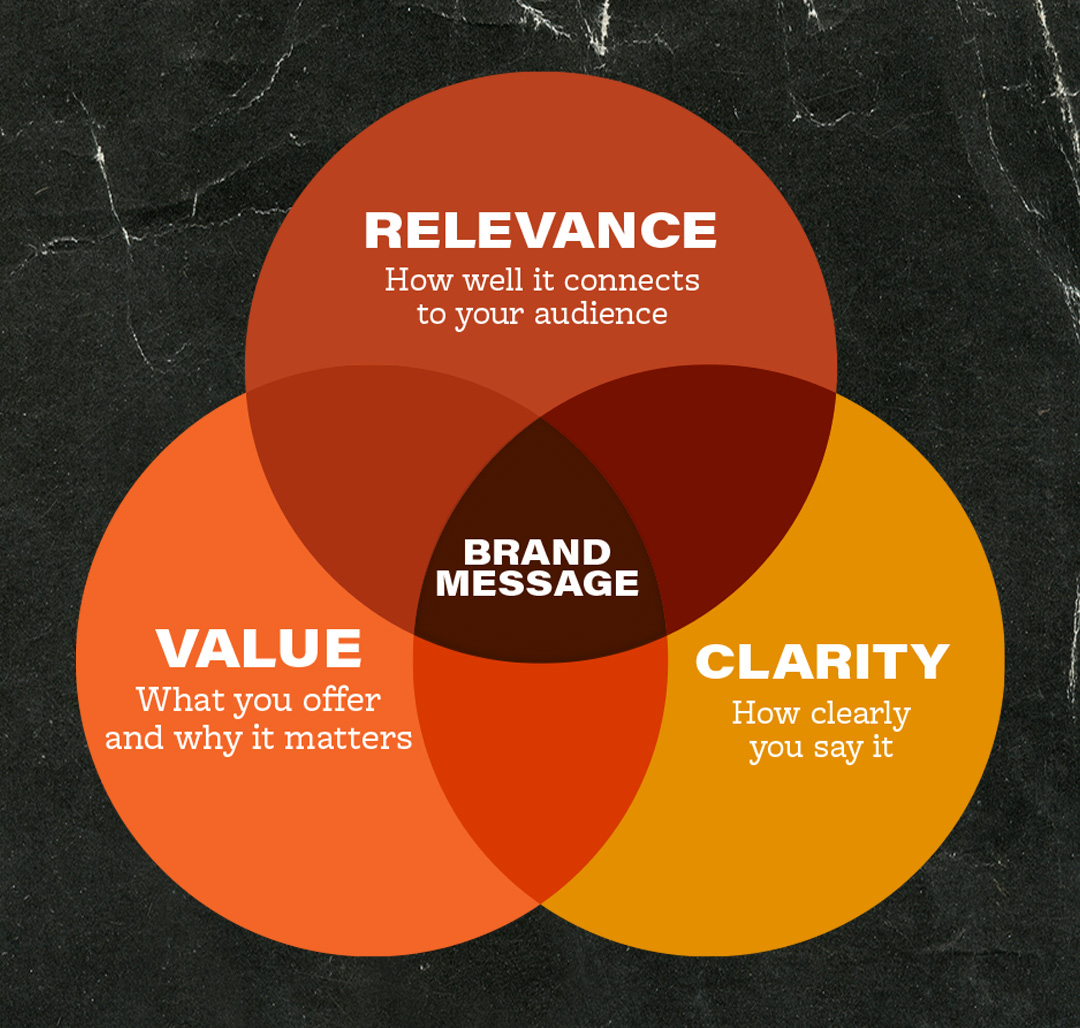
Brand messaging is the language I use to communicate value to the people I’m trying to reach. It’s the story I’m telling, and when it’s done right, it covers what I do, who it’s for, why it matters, and how consistently and clearly that shows up across every touchpoint.
Messaging isn’t the same as copywriting. Copy is execution, while messaging is direction. It shapes how I talk about a product or service. Not just the words, but the intent behind them.
And it’s not positioning either. Positioning is where I sit in the market. Messaging is how I express that position, so people get it. When it’s working, the right people read it and go, “That’s exactly what I need.”
Why Most Brand Messaging Fails
Most messaging fails because it’s built from the inside out without pressure-testing how it lands with real people. I’ve seen it fall apart in the same five ways, over and over:
- Vague Language: Soft claims, buzzwords, and generic phrasing that don’t say anything.
- Me‑First Positioning: Focusing on what the company wants to say instead of what the audience needs to hear.
- Inconsistent Tone: Shifting voice or style across web, email, ads, and sales decks dilutes brand identity.
- Overloaded Messaging: Trying to communicate every possible benefit at once instead of sticking to one clear message.
- No Proof: Bold claims without data, testimonials, or real-world examples don’t build trust.
Let’s jump on the nostalgia train for a moment so I can show, not tell, what I’m talking about.
Coca‑Cola’s 1985 launch of New Coke is an iconic lesson in what happens when messaging misfires. Despite consumer taste tests favoring the new formula, Coke got massive pushback because the launch erased the familiar identity people trusted, which they’d associated with “the real thing.” Public outrage was so intense that Coke reintroduced the original formula just three months later.
The messaging failed because it was completely disconnected from the emotional relationship consumers had with the brand, not because of flavor or quality.
The 5 Elements of an Effective Message
When I’m building or refining brand messaging, these are the five elements I always start with. If even one is missing, the whole thing starts to wobble.
-
Clarity
– If people can’t tell what you do in five seconds, they’re gone. I aim for plain language, without fluff, buzzwords, or self-serving cleverness. Don’t write. We deliver next-gen customer-centric solutions for the digital enterprise. What does that even mean? We help B2B brands fix their messaging so buyers get it.
-
Relevance
– Even if the message is clear, it still has to matter. I always ask: does this speak to what my audience cares about? Not what I think is cool. Not what my boss wants to highlight. What they need to hear, in their words, at their stage of the journey.
-
Differentiation
– You can’t just say what you do. You have to show how you’re different. When everyone in the category is saying “trusted partner” or “full-service agency,” none of it sticks. I look for specifics like process, point of view, structure, values; anything that makes the offer feel like it couldn’t have come from anyone else.
-
Proof
– Claims without evidence are just noise. I always hunt for ways to back things up. Real evidence like results, quotes, metrics, or even a quick “we’ve done this for brands like X.” It doesn’t have to be a formal case study, just examples of the work you’ve done.
-
Consistency
– Messaging isn’t just a homepage problem. It’s an everything problem. I examine how it’s showing up in emails, ads, social captions, pitch decks, outbound scripts, anywhere language plays a role. When the tone and message shift too much, the whole brand feels shaky.

How I Craft a Messaging Strategy That Works
There’s no single template for great messaging, but this is the process I follow every time. It keeps the message grounded in reality, aligned across teams, and built to evolve.
-
Define the Core Audience
– I start by getting super clear on who I’m talking to. Not just “enterprise buyers” or “small business owners,” but real segments with real needs, roles, and buying triggers. Messaging that tries to reach everyone ends up hitting no one.
-
Talk to Actual Customers
– Surveys are fine, but I get way more insight from direct conversations. I listen for the language they use, the pain points they repeat, and the moments that make them say yes or almost walk away.
-
Map Features to Outcomes
– Features are what a product does. Outcomes are what the customer gets. I map every feature to a specific benefit or business result. That translation step is what turns specs into selling points.
-
Build a Message Hierarchy
– I sketch out the core structure: headline → subhead → support. That top-level message needs to land fast. Everything underneath reinforces and expands without derailing the clarity.
-
Test Messages in the Wild
– Before I lock anything down, I run real-world tests like subject lines in emails, headlines on landing pages, or paid ad copy. I look at what gets clicks, what holds attention, and what converts. Sometimes I use tools like Wynter to get fast, targeted feedback from the right audience. Other times, I’ll run my A/B tests and watch what resonates. Either way, the message earns its place before it gets rolled out.
-
Document the Messaging Guide
– Once things are working, I write it down. Core messages, voice traits, sample copy, do/don’t examples. It doesn’t have to be a detailed manifesto, just usable.
-
Loop in Other Teams
– Marketing can’t carry messaging alone. I bring in sales, customer success, product—whoever’s talking to customers—to ensure everyone’s speaking the same language. That alignment pays off fast.
-
Revisit and Refine
– Messaging isn’t a one-and-done. I revisit it quarterly, especially after product launches, market shifts, or customer feedback. If it stops working, I update it instead of trying to force old messaging into a new idea.
Frameworks I Use to Build Better Messaging
When I need to sharpen a message or break through writer’s block, these are the frameworks I turn to. They help me see the message from the buyer’s perspective and stay focused on what matters.
-
Jobs To Be Done (JTBD)
This one’s all about understanding why someone buys. Not just what they need, but the job they’re trying to get done. I ask questions like:
- What triggered their search for a solution?
- What would success look like for them?
- What are they trying to avoid?
Framing your messaging around the job, not the product, makes it more relevant and more human.
-
Value Proposition Canvas
I use this when I need to connect product features to real customer outcomes. It helps me align what I offer with what the audience cares about by mapping pains, gains, and expectations to benefits and differentiators. It’s especially helpful for B2B teams that tend to lead with features instead of outcomes.
-
Before–After–Bridge
This one’s simple and it works:
- Before: what life looks like now
- After: what it could look like
- Bridge: how the product or service gets them there
It’s a great gut-check for whether the message communicates value. If I can’t fill in those blanks in one sentence each, I probably don’t have a clear message yet.
-
PAS (Problem, Agitation, Solution)
Old school, still effective. I start with the problem, turn up the stakes (agitation), then introduce the solution. It works well for cold outreach and landing pages, or anywhere I need to hook attention fast and guide someone toward action.

Messaging in Action: Real B2B Fixes
I’ve rewritten a lot of messaging over the years, and the most significant shift usually comes down to clarity, tone, and giving the reader something they can latch onto. To show you what that looks like in practice, here are five quick before-and-afters across different industries.
SaaS: Productivity Platform
Before:
“A centralized solution empowering teams to collaborate efficiently and drive cross-functional success.”
After:
“One platform to manage projects, share files, and move faster together.”
We swapped the corporate filler for plain, purposeful language. It made the benefits feel real and not like theoretical slop.
Services: B2B Marketing Agency
Before:
“We deliver strategic marketing initiatives that accelerate brand performance across the funnel.”
After:
“We help B2B brands tighten their message so the right people pay attention.”
We led with value, dropped the buzzwords, and focused on clarity that cuts through. You know, the stuff clients need.
Logistics: Freight Management
Before:
“Optimized transport solutions for maximum efficiency and visibility at scale.”
After:
“Reliable freight shipping with real-time tracking and zero guesswork.”
More specific, more useful, and more trust-building. That’s what this rewrite did in a single sentence.
Manufacturing: Industrial Equipment Supplier
Before:
“Providing cutting-edge technology for end-to-end operational productivity.”
After:
“Machinery built to keep production running, not breaking down.”
We focused on what is always a big worry for operators: downtime. Then, we made the value unmistakable.
Fintech: Payment Solutions
Before:
“A flexible platform to streamline transaction processing and enhance customer satisfaction.”
After:
“Send invoices, take payments, and get paid without chasing anyone.”
The original was like trying to recite theory with a mouth full of marbles. The rewrite is a promise delivered in real talk.
Want to see what a messaging refresh could do for your brand?
FAQs About Effective Messaging
How do I know if my messaging is working?
If the right people are stopping, nodding, and reaching out, it’s working. I look at click-throughs, conversions, time on page, demo requests, and replies to outbound, but I also listen for how often prospects repeat back the message unprompted.
How often should I update my messaging?
I revisit it quarterly. Not because it always needs a complete rewrite, but because many factors shift, including audience expectations, product features, the market, and the competition.
Should messaging be different across marketing and sales?
No, but it should flex. The core message should remain the same, but its presentation can evolve based on someone’s journey. I write marketing copy to capture attention, and sales copy to hold it, but they should feel like they came from the same brain.
What’s the difference between messaging and positioning?
Positioning is where you sit in the market. Messaging is how you say it out loud. Positioning helps me decide what to emphasize, while messaging is the language I use to make it land.
How do I make a compelling message?
I start with three questions: Who am I talking to? What do they care about? And how does what I’m offering solve something real for them? Then I build from there with clarity, relevance, and proof. If I can answer all three without guessing, I know I’m on the right track.
What determines a message’s effectiveness?
The audience does. I don’t go by how clever it sounds in a brainstorm, but by whether it moves people to act, if it’s remembered, repeated, or responded to.
How to message effectively?
Say the right thing to the right people in a way that makes sense to them, not to your team, not to your C-suite, and not to your internal thesaurus. Talk like a human, start with truth, and cut the filler.
Final Thoughts: Messaging Is a Practice, Not a Tagline
We all love a good brainstorm (do we?), but that’s not where good messaging comes from. It comes from the world outside your brain, in the form of real conversations, tight feedback loops, and teams that know how to work language into something sharp and usable.
Everything I’ve laid out here—clarity, relevance, proof, alignment—it only works when it’s part of the day-to-day and not a one-off. Messaging needs forward momentum, rather than languish as a static deck in a folder.
If yours feels flat or scattered, start with an audit. Pull up what you’re putting into the world and read it like a customer. If it doesn’t click fast, it’s time to fix it.
Is your messaging hitting the target? Get in touch, let’s find out together.
