

Top Tech Channel Marketing Agencies 2026
The Top 13 Channel Partner Marketing Agencies 2026

These agencies develop effective marketing programs that help channel partners reach and engage their target audiences for increased conversions and sales.
Tech Channel Marketing Agencies
- 4B Marketing
- Ironpaper
- A Fluent Vision
- 3 Marketeers
- PureChannels
- bChannels
- The Partner Marketing Group
- Elevation Marketing
- Ansira
- Altitude Marketing
- Tech Target
- Channel Impact
- Marketopia
Channel partner agencies specialize in creating effective marketing programs that enable manufacturers and producers to reach and engage target audiences through external partners, like distributors, resellers, or agents. Channel partner business executives should consider partnering with channel partner agencies to take advantage of targeted marketing campaigns, full-service marketing solutions, and streamlined marketing programs.
4B Marketing’s specialized focus on channel partner marketing allows them to deliver highly targeted and effective marketing solutions that drive results. They understand the unique challenges and opportunities channel partner relationships can present, and they are experts at crafting campaigns that engage a business’s target audience through their partner network.
4B Marketing’s services include:
- Channel Partner Marketing: 4B Marketing works with businesses to develop customized channel partner marketing programs that help them establish strong relationships with their manufacturers and producers, drive revenue growth, and expand their reach.
- Full-Service Digital Marketing: 4B Marketing offers a full range of digital marketing services, including SEO, PPC, social media marketing, and more. They help businesses leverage the power of digital marketing to connect with their target audience and achieve their marketing goals.
- Content Creation: 4B Marketing’s highly skilled team of content creators develops compelling content that resonates with their clients’ target audiences. They help businesses communicate their message effectively and establish a strong brand identity.

4B Marketing takes a collaborative approach to marketing, working closely with businesses to understand their unique needs and objectives, which allows them to create customized solutions that help clients achieve their goals while staying on time and within budget. Their strong communication skills and responsiveness are a hallmark of their service.
Partnering with 4B Marketing can benefit B2B companies in several ways. Here are a few reasons why B2B C-suite executives should consider partnering with 4B Marketing:

- Customized Marketing Solutions: 4B Marketing works closely with their clients to develop customized marketing solutions that meet their unique needs and objectives. They take the time to understand their clients’ businesses and create strategies that help them achieve their goals.
- Proven Track Record: 4B Marketing has a proven track record of helping B2B businesses drive revenue growth and achieve their marketing objectives. Their team of experts has the experience and expertise needed to create effective marketing solutions that deliver results.
- Strong Relationships: 4B Marketing understands the importance of establishing strong relationships with channel partners. They work closely with their clients’ to provide them with the support and resources they need to effectively promote products and services.
4B Marketing has worked with a wide range of clients across various industries, consistently delivering measurable results that drive revenue growth. Their team of experienced professionals possesses a wealth of knowledge in channel partner marketing and other areas of digital marketing, which allows them to provide a comprehensive suite of services to their clients.
-
Ironpaper
Ironpaper is a B2B marketing and growth agency that specializes in building growth engines for marketing and sales success. They power demand generation campaigns, account-based marketing (ABM) programs, create B2B content, strengthen sales enablement, generate qualified leads, and improve B2B marketing efforts. Their full-service approach covers every aspect of B2B marketing and sales, from strategy and creation to execution and measurement.
Many B2B companies struggle to differentiate themselves from their competitors and Ironpaper helps businesses reframe their offering around the buyer’s perspective, articulating a clear value proposition that resonates with ideal buyers. Through their thought leadership, messaging, and strategy development, Ironpaper helps businesses communicate their unique value and stand out in a crowded market.
At Ironpaper, growth efforts require more than just running campaigns, installing technology, and executing tactics without testing and measurement. They believe that data-driven marketing strategies are key to success, and they take a holistic approach to B2B marketing and sales that focuses on generating measurable results.
-
A Fluent Vision LLC
A Fluent Vision (AFV) offers a range of services, including Marketing-as-a-Service, which helps clients execute better marketing and accelerate lead conversion to grow their pipeline. They also offer Partner Engagement to recruit and develop channel partners to achieve key performance objectives, Sales Institute to empower sales organizations to shorten the sales cycle, and Executive Consulting to build, focus, and strengthen sales and marketing infrastructure.
They have more than 75 years of combined industry experience, and their services aim to increase efficiency, enhance demand generation effectiveness, and streamline marketing and sales synergy for their clients. AFV’s marketing managers develop highly targeted campaigns that resonate with the audience, resulting in predictable lead generation.
AFV works to provide a clear view of the partner pipeline and measure ROI on channel programs, helping businesses stay ahead of IT transformation and keep their pipeline growing.
-
3 Marketeers
3 Marketeers is a marketing agency that helps businesses generate marketing qualified leads faster, compress sales cycles, and drive more opportunities to the bottom line. They do this by combining creativity, technology, and data to curate personalized buyer journeys that lead to increased sales.
The success of 3 Marketeers is a result of their commitment to forward momentum and constantly evolving to exceed clients’ marketing goals. They offer a range of services, including data-driven strategies, content development, creative services, events, marketing automation, web development, and paid media.
Their Channel Lead Accelerator program provides businesses with a turnkey solution to seamlessly identify campaign assets, engage partners, and run the campaign while providing robust reporting to track ROI. This program helps businesses set up their partners and themselves for success by focusing on real-time follow-up to marketing qualified leads (MQLs). With their expertise in designing, building, and scaling marketing with channel partners, 3 Marketeers can help businesses achieve their goals.
-
PureChannels
PureChannels specializes in helping businesses grow through their channel partners. They provide a strategic approach to creating high-quality content that captures the unique tone of voice and engages the target audience. PureChannels offers a variety of content types to help businesses stand out and generate more sales, including one-off pieces and entire campaigns.
PureChannels also offers outsourcing solutions for lead and demand generation, providing a steady stream of qualified leads for businesses to follow up on. Their team of channel sales and marketing professionals develops proven tactics and strategies to attract potential partners or customers, preventing revenue loss even when businesses or partners lack the necessary resources to run sales and marketing activities.
Their creative team of channel experts works collaboratively with businesses to provide a comprehensive partner portal and PRM services that empower partners with valuable resources, such as training materials, product information, and marketing collateral. The partner portal is intuitive, user-friendly, and engaging, making it easier for partners to access the resources they need. As a result, businesses enjoy more productive, profitable, and successful relationships with their channel partners, driving engagement and increasing revenue.
-
bChannels
bChannels offers partner marketing as a service, which means they provide a team of leading channel partner marketing experts to help maximize your through-partner marketing efforts. With precision targeting using their Intelligent IndexTM, they can align partners with the digital marketing activities that best match their capabilities, maximizing your return and accelerating revenue growth.
Knowing your competition is key to gaining mindshare among your customers and partners. That’s why bChannels provides a deep understanding of the digital marketing battlegrounds so you can navigate the challenges and build mindshare for your brand.
One of the biggest challenges in marketing is creating effective campaigns that resonate with your target audience. bChannels has solved this by offering packaged marketing campaigns that are fixed price, in-region, and have clear outcomes. Their team of channel partner experts will guide your partners through the campaigns, ensuring they understand and value them.
What sets bChannels apart is their Virtual Partner Marketing Manager, who gives you the best of their 20-plus years’ channel experience. They work directly with you and your partners’ digital marketing activity, planning campaigns, offering advice, and assessing performance to ensure your partners get the best from their marketing relationship with you.
-
The Partner Marketing Group
The Partner Marketing Group is a B2B marketing agency specializing in software and technology channels. Their technology marketing experts help businesses become thought leaders and earn the trust of their prospects, customers, and partners.
Their creative team of storytellers helps businesses produce high-quality content to educate, engage, and inspire their audience. They also create targeted marketing campaigns for any market, purpose, or channel, from strategy to content to execution.
With their senior-level experts, The Partner Marketing Group offers planning and strategy services to assess, strategize, build, guide, and execute marketing plans. They also provide a range of social media solutions to take advantage of powerful B2B marketing platforms such as LinkedIn.
As channel marketing experts, The Partner Marketing Group empowers partners to compete and grow with personalized channel marketing solutions, programs, and training. They also offer The Solutions Connection, a comprehensive and searchable online directory for promoting add-on software solutions for any publisher.
-
Elevation Marketing
Elevation Marketing is a full-funnel marketing agency that provides B2B businesses with data-driven, digital-first solutions that inspire change, motivate action, and deliver predictable outcomes. They offer end-to-end B2B marketing programs, highlighting brand, demand, ABM, channel, and sales enablement.
Developing ecosystems to manage data and marketing programs that consistently deliver measurable results, Elevation seeks to understand each client’s unique business needs and objectives, simplifying the process of building systems and campaigns by first focusing on data. They develop compelling stories and engaging omni channel campaigns that drive customers and prospects towards critical business actions, tying it all together with cutting-edge technology systems and platforms.
Elevation Marketing offers a range of B2B marketing services that reflect the unique needs of each business. From account-based marketing to branding, channel, content, creative, development, digital, ecommerce, events, innovation, lead gen, media, public relations, research, sales enablement, social media, strategy, and video, their full-service approach is focused on delivering customized solutions.
-
Ansira
Ansira provides an end-to-end channel marketing program platform and services that enable marketing activation and funds management for brands with indirect sales partners. The company delivers modernized and efficient programs that help enable partners, providing custom partner program designs, holistic funds management, and asset management capabilities.
With a scalable proprietary platform, Ansira reduces marketing redundancies and wasted spend by integrating API and automation technologies, providing effective marketing claim review processes, and offering lead-to-revenue local website technology platforms and advertising solutions. The platform also offers insights and trends to guide clients’ and partners’ next-best decision-making processes.
Ansira’s platform is rules-based and globally compliant, providing access to assets, campaigns, and funds while ensuring program activity governance, in-market assessments, brand compliance, and customizable marketing assets. The platform also supports a global user experience, with services led by technology-powered support teams serving 190 countries in 13 languages, and partner incentivization, funding, and payment in 130 countries and 40 currencies.
Ansira’s technology suite, the Ansira Edge Technology SuiteSM, acts as a nerve center with modules for compliance, channel engagement, and funds management. The modules can stand alone but are more impactful when combined to meet all local experience needs, empowering partner ecosystems to sell more and meet evolving business needs.
-
Altitude Marketing
Altitude Marketing is a B2B marketing agency that provides integrated, data-driven marketing solutions to help businesses achieve their goals. They specialize in serving clients in the life sciences, technology, manufacturing, and other technical industries.
Unlike other marketing agencies that focus on one specific area, Altitude Marketing offers a full-service approach that includes marketing strategy, branding, content creation, SEO, web development, digital marketing, public relations, social media, graphic design, video, media buying, and process automation. They understand that B2B and technology companies need data-driven marketing strategies that align with their business goals and deliver real results.
Altitude Marketing’s team gets to know each client’s industry and buyers, and translates complex products and services into visibility-raising strategies and frameworks. They work with clients to develop an integrated marketing and advertising mix that gets attention and leads. With a global client base and a focus on results, Altitude Marketing provides B2B marketing services that fit each business’s unique needs.
-
TechTarget
TechTarget is a reliable resource for finding active buyers in your tech market. With access to the largest online enterprise tech communities, they provide accurate and precise data for better business. By using the right behavioral data, you can engage with buyers at every point of their journey with personalized outreach.
Their priority engine tool allows you to engage with real people who are making actual buying decisions. TechTarget covers all the major enterprise tech markets, including AI, BI & Big Data, Business Applications, CIO & IT Strategy, Cloud & DevOps, Data Center & Virtualization, End User Computing, Health IT, Networking, Security, Storage, Channel Resources, and Technology Content Libraries.
They provide a range of services to enhance your marketing efforts, from building awareness through intent-driven advertising to generating better leads with AI-optimized lead generation. TechTarget also helps with in-person and virtual event attendance, converting website visitors, and enabling sales and channel partners with personalized pitches and real insights.
-
Channel Impact
Channel Impact leads in partner marketing and enablement, helping companies expand their reach and revenue with high-impact content and services.
What sets Channel Impact apart is their ability to manage every aspect of partner content creation and drive partner campaign utilization with Virtual Partner Marketing services. Unlike agencies that only provide creative services, Channel Impact works with clients to develop messaging, create copy, and ensure that the finished product is highly impactful.
With their full-service solutions, Channel Impact takes care of the heavy lifting, so clients don’t have to. Their range of services includes partner strategy and programs, staffing solutions, partner marketing and enablement, partner events, partner analytics, and partner success practice. By building, executing, and measuring channel offerings, Channel Impact ensures their clients get the results they need to succeed.
Channel Impact’s portfolio includes a wide range of successful projects such as Virtual Partner Marketing Managers, Customer Success Manager Playbook, Global Partner Program Refresh, Partner Program Digital Guide, Partner Success Story Program, and Sales Kick-Off Content. With Channel Impact, businesses can leverage their expertise to drive engagement, boost revenue growth, and expand their reach in the market.
-
Marketopia
Marketopia helps MSPs, VARs, and tech vendors accelerate growth through marketing, lead generation, and sales enablement. They execute demand generation campaigns, create B2B content, and set qualified sales appointments to keep pipelines active. Their digital marketing services — including SEO, PPC, social media, and website development — are designed to drive visibility and conversions.
In addition to marketing, Marketopia develops and manages channel partner programs. They streamline onboarding processes, design incentive plans, and create enablement tools that strengthen partner engagement. Their strategies are practical, results-focused, and built to scale. Marketopia emphasizes clear messaging, helping tech businesses communicate their value to partners and prospects.
With their deep understanding of the tech channel and hands-on approach, Marketopia doesn’t rely on generic solutions. Instead, they analyze each client’s challenges, execute targeted campaigns, and continually refine data-based strategies. The goal is to leave clients with more qualified leads, stronger partner networks, and measurable business growth.
Channel Partner Marketing Basics
What Is B2B Channel Partner Marketing?
B2B channel partner marketing is a powerful approach manufacturers and producers often use to reach and engage their target audiences through external partners, like distributors, resellers, or agents. By leveraging the expertise and resources of their partners, manufacturers and producers can expand their reach and drive revenue growth.
Partnering with a top channel marketing agency enables partners to sell more efficiently and achieve their marketing and sales objectives. Here are some key benefits of working with a partner marketing agency:
- Targeted Marketing Campaigns: Partner marketing agencies specialize in creating targeted marketing campaigns that resonate with your target audience, resulting in increased conversions and sales.
- Full-Service Marketing Solutions: Full-service marketing agencies offer a range of marketing solutions, including digital marketing services, content creation, and conversion rate optimization (CRO). An award-winning agency can deliver a full suite of marketing services, including social media marketing, content marketing, and marketing automation, to help businesses grow their audience and drive conversions.
- Streamlined Marketing Programs: Partner marketing agencies provide marketing automation solutions that allow businesses to streamline their marketing efforts and optimize their marketing programs. This helps businesses save time and money and achieve better results.

Partnering with a full-service digital marketing agency that specializes in partner marketing can help businesses create effective marketing programs, increase their conversion rates, and achieve their marketing objectives.
What is a Channel Partner?
A channel partner is a company or individual who sells a manufacturer’s or producer’s products or services to end customers. These partners can include distributors, resellers, value-added resellers (VARs), system integrators, agents, and other intermediaries.
When it comes to B2B marketing, channel partners are a critical component in expanding a manufacturer’s or producer’s reach and driving revenue growth. By tapping into their expertise and resources, they can establish a broader presence in the market and reach new customers they may not have been able to reach on their own.
A top channel partner marketing agency can help you maximize your partnership potential and achieve your marketing goals.
What Are Channel Partners in Marketing?
Channel partners in marketing are external companies or individuals that collaborate with your business to promote and sell a manufacturer or producer’s products or services to end customers.
Partnering with a top channel partner marketing agency can help you maximize the potential of your relationships with manufacturers and producers and achieve your marketing goals. These agencies specialize in creating programs that enable partners to work effectively with manufacturers and producers, establish strong relationships, and achieve their marketing and sales objectives.
Take your channel marketing efforts to the next level with 4B Marketing. Get in touch with our team today and experience the benefits of a growth-oriented mindset and a results-driven approach to partner marketing.

How to Build Messaging That Connects and Converts
Listen to your audience, focus on clarity, and test to see what works.
It’s the messaging. That’s what’s getting in your way.
In a 2024 survey, 51% of B2B buyers said vendor content felt too generic or irrelevant. When over half your audience doesn’t ‘get’ you, that’s a significant problem.
Messaging is how I make value clear. It’s how I connect what I do to what people care about. And when it’s off, everything else drags, including engagement, trust, conversions, and growth.
Here’s how I approach fixing that and how I test whether the message is doing its job.

What Is Brand Messaging?
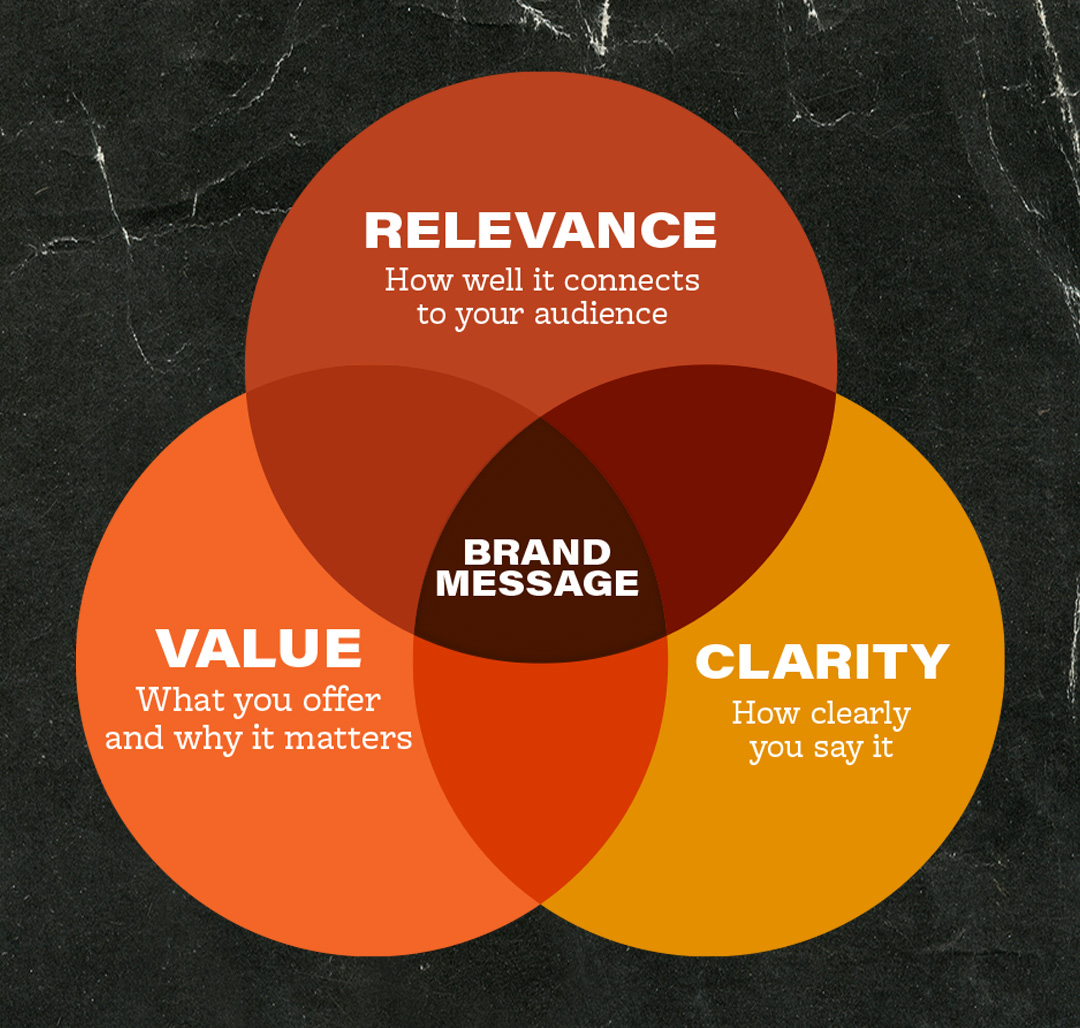
Brand messaging is the language I use to communicate value to the people I’m trying to reach. It’s the story I’m telling, and when it’s done right, it covers what I do, who it’s for, why it matters, and how consistently and clearly that shows up across every touchpoint.
Messaging isn’t the same as copywriting. Copy is execution, while messaging is direction. It shapes how I talk about a product or service. Not just the words, but the intent behind them.
And it’s not positioning either. Positioning is where I sit in the market. Messaging is how I express that position, so people get it. When it’s working, the right people read it and go, “That’s exactly what I need.”
Why Most Brand Messaging Fails
Most messaging fails because it’s built from the inside out without pressure-testing how it lands with real people. I’ve seen it fall apart in the same five ways, over and over:
- Vague Language: Soft claims, buzzwords, and generic phrasing that don’t say anything.
- Me‑First Positioning: Focusing on what the company wants to say instead of what the audience needs to hear.
- Inconsistent Tone: Shifting voice or style across web, email, ads, and sales decks dilutes brand identity.
- Overloaded Messaging: Trying to communicate every possible benefit at once instead of sticking to one clear message.
- No Proof: Bold claims without data, testimonials, or real-world examples don’t build trust.
Let’s jump on the nostalgia train for a moment so I can show, not tell, what I’m talking about.
Coca‑Cola’s 1985 launch of New Coke is an iconic lesson in what happens when messaging misfires. Despite consumer taste tests favoring the new formula, Coke got massive pushback because the launch erased the familiar identity people trusted, which they’d associated with “the real thing.” Public outrage was so intense that Coke reintroduced the original formula just three months later.
The messaging failed because it was completely disconnected from the emotional relationship consumers had with the brand, not because of flavor or quality.
The 5 Elements of an Effective Message
When I’m building or refining brand messaging, these are the five elements I always start with. If even one is missing, the whole thing starts to wobble.
-
Clarity
– If people can’t tell what you do in five seconds, they’re gone. I aim for plain language, without fluff, buzzwords, or self-serving cleverness. Don’t write. We deliver next-gen customer-centric solutions for the digital enterprise. What does that even mean? We help B2B brands fix their messaging so buyers get it.
-
Relevance
– Even if the message is clear, it still has to matter. I always ask: does this speak to what my audience cares about? Not what I think is cool. Not what my boss wants to highlight. What they need to hear, in their words, at their stage of the journey.
-
Differentiation
– You can’t just say what you do. You have to show how you’re different. When everyone in the category is saying “trusted partner” or “full-service agency,” none of it sticks. I look for specifics like process, point of view, structure, values; anything that makes the offer feel like it couldn’t have come from anyone else.
-
Proof
– Claims without evidence are just noise. I always hunt for ways to back things up. Real evidence like results, quotes, metrics, or even a quick “we’ve done this for brands like X.” It doesn’t have to be a formal case study, just examples of the work you’ve done.
-
Consistency
– Messaging isn’t just a homepage problem. It’s an everything problem. I examine how it’s showing up in emails, ads, social captions, pitch decks, outbound scripts, anywhere language plays a role. When the tone and message shift too much, the whole brand feels shaky.

How I Craft a Messaging Strategy That Works
There’s no single template for great messaging, but this is the process I follow every time. It keeps the message grounded in reality, aligned across teams, and built to evolve.
-
Define the Core Audience
– I start by getting super clear on who I’m talking to. Not just “enterprise buyers” or “small business owners,” but real segments with real needs, roles, and buying triggers. Messaging that tries to reach everyone ends up hitting no one.
-
Talk to Actual Customers
– Surveys are fine, but I get way more insight from direct conversations. I listen for the language they use, the pain points they repeat, and the moments that make them say yes or almost walk away.
-
Map Features to Outcomes
– Features are what a product does. Outcomes are what the customer gets. I map every feature to a specific benefit or business result. That translation step is what turns specs into selling points.
-
Build a Message Hierarchy
– I sketch out the core structure: headline → subhead → support. That top-level message needs to land fast. Everything underneath reinforces and expands without derailing the clarity.
-
Test Messages in the Wild
– Before I lock anything down, I run real-world tests like subject lines in emails, headlines on landing pages, or paid ad copy. I look at what gets clicks, what holds attention, and what converts. Sometimes I use tools like Wynter to get fast, targeted feedback from the right audience. Other times, I’ll run my A/B tests and watch what resonates. Either way, the message earns its place before it gets rolled out.
-
Document the Messaging Guide
– Once things are working, I write it down. Core messages, voice traits, sample copy, do/don’t examples. It doesn’t have to be a detailed manifesto, just usable.
-
Loop in Other Teams
– Marketing can’t carry messaging alone. I bring in sales, customer success, product—whoever’s talking to customers—to ensure everyone’s speaking the same language. That alignment pays off fast.
-
Revisit and Refine
– Messaging isn’t a one-and-done. I revisit it quarterly, especially after product launches, market shifts, or customer feedback. If it stops working, I update it instead of trying to force old messaging into a new idea.
Frameworks I Use to Build Better Messaging
When I need to sharpen a message or break through writer’s block, these are the frameworks I turn to. They help me see the message from the buyer’s perspective and stay focused on what matters.
-
Jobs To Be Done (JTBD)
This one’s all about understanding why someone buys. Not just what they need, but the job they’re trying to get done. I ask questions like:
- What triggered their search for a solution?
- What would success look like for them?
- What are they trying to avoid?
Framing your messaging around the job, not the product, makes it more relevant and more human.
-
Value Proposition Canvas
I use this when I need to connect product features to real customer outcomes. It helps me align what I offer with what the audience cares about by mapping pains, gains, and expectations to benefits and differentiators. It’s especially helpful for B2B teams that tend to lead with features instead of outcomes.
-
Before–After–Bridge
This one’s simple and it works:
- Before: what life looks like now
- After: what it could look like
- Bridge: how the product or service gets them there
It’s a great gut-check for whether the message communicates value. If I can’t fill in those blanks in one sentence each, I probably don’t have a clear message yet.
-
PAS (Problem, Agitation, Solution)
Old school, still effective. I start with the problem, turn up the stakes (agitation), then introduce the solution. It works well for cold outreach and landing pages, or anywhere I need to hook attention fast and guide someone toward action.

Messaging in Action: Real B2B Fixes
I’ve rewritten a lot of messaging over the years, and the most significant shift usually comes down to clarity, tone, and giving the reader something they can latch onto. To show you what that looks like in practice, here are five quick before-and-afters across different industries.
SaaS: Productivity Platform
Before:
“A centralized solution empowering teams to collaborate efficiently and drive cross-functional success.”
After:
“One platform to manage projects, share files, and move faster together.”
We swapped the corporate filler for plain, purposeful language. It made the benefits feel real and not like theoretical slop.
Services: B2B Marketing Agency
Before:
“We deliver strategic marketing initiatives that accelerate brand performance across the funnel.”
After:
“We help B2B brands tighten their message so the right people pay attention.”
We led with value, dropped the buzzwords, and focused on clarity that cuts through. You know, the stuff clients need.
Logistics: Freight Management
Before:
“Optimized transport solutions for maximum efficiency and visibility at scale.”
After:
“Reliable freight shipping with real-time tracking and zero guesswork.”
More specific, more useful, and more trust-building. That’s what this rewrite did in a single sentence.
Manufacturing: Industrial Equipment Supplier
Before:
“Providing cutting-edge technology for end-to-end operational productivity.”
After:
“Machinery built to keep production running, not breaking down.”
We focused on what is always a big worry for operators: downtime. Then, we made the value unmistakable.
Fintech: Payment Solutions
Before:
“A flexible platform to streamline transaction processing and enhance customer satisfaction.”
After:
“Send invoices, take payments, and get paid without chasing anyone.”
The original was like trying to recite theory with a mouth full of marbles. The rewrite is a promise delivered in real talk.
Want to see what a messaging refresh could do for your brand?
FAQs About Effective Messaging
How do I know if my messaging is working?
If the right people are stopping, nodding, and reaching out, it’s working. I look at click-throughs, conversions, time on page, demo requests, and replies to outbound, but I also listen for how often prospects repeat back the message unprompted.
How often should I update my messaging?
I revisit it quarterly. Not because it always needs a complete rewrite, but because many factors shift, including audience expectations, product features, the market, and the competition.
Should messaging be different across marketing and sales?
No, but it should flex. The core message should remain the same, but its presentation can evolve based on someone’s journey. I write marketing copy to capture attention, and sales copy to hold it, but they should feel like they came from the same brain.
What’s the difference between messaging and positioning?
Positioning is where you sit in the market. Messaging is how you say it out loud. Positioning helps me decide what to emphasize, while messaging is the language I use to make it land.
How do I make a compelling message?
I start with three questions: Who am I talking to? What do they care about? And how does what I’m offering solve something real for them? Then I build from there with clarity, relevance, and proof. If I can answer all three without guessing, I know I’m on the right track.
What determines a message’s effectiveness?
The audience does. I don’t go by how clever it sounds in a brainstorm, but by whether it moves people to act, if it’s remembered, repeated, or responded to.
How to message effectively?
Say the right thing to the right people in a way that makes sense to them, not to your team, not to your C-suite, and not to your internal thesaurus. Talk like a human, start with truth, and cut the filler.
Final Thoughts: Messaging Is a Practice, Not a Tagline
We all love a good brainstorm (do we?), but that’s not where good messaging comes from. It comes from the world outside your brain, in the form of real conversations, tight feedback loops, and teams that know how to work language into something sharp and usable.
Everything I’ve laid out here—clarity, relevance, proof, alignment—it only works when it’s part of the day-to-day and not a one-off. Messaging needs forward momentum, rather than languish as a static deck in a folder.
If yours feels flat or scattered, start with an audit. Pull up what you’re putting into the world and read it like a customer. If it doesn’t click fast, it’s time to fix it.
Is your messaging hitting the target? Get in touch, let’s find out together.


The Competitive Positioning Trap That's Killing B2B Brands
Brands that mirror the competition lose their ability to stand out, forcing buyers to choose based on price or familiarity instead of value.
In B2B, competitive positioning means making it unmistakably clear why your company exists, who it serves, and what sets it apart from every other option on the table. It’s the foundation of relevance and your chance to be remembered, respected, and chosen.
The problem is that too many brands mimic the category leader, recycle the same buzzwords, borrow the same tone, and build strategies that resemble knockoff versions of someone else’s success. It feels like a smart move, something safe and proven. But what it does is bury any chance at differentiation beneath layers of sameness.
Not to go full on psychoanalytic here, but that instinct to blend in comes from fear. The fear of being too specific, too bold, too different. But relevance doesn’t come from caution. It comes from clarity, conviction, and the willingness to draw sharp lines. In a space full of lookalikes, the brands that break through stop imitating and start owning their position with both hands.
Why Competitive Positioning Matters More in “Boring” Industries
In industries where the product isn’t sexy, brands tend to think they can get away with blending in. That’s the first mistake. Because when everyone starts looking the same, buyers become bored and lose interest.
Sameness is uninspired. What’s more, it’s dangerous because it erodes the buyer’s ability to make a meaningful distinction. If your site looks like your competitor’s, and your pitch deck reads like it came from the same agency, you’ve already given up the one advantage you control: the clarity of your story.
And when buyers can’t tell the difference, they fall back on the two things they do understand—brand recognition and price. You either lose the deal to the name they’ve heard before, or you win it with a margin that makes growth impossible.
That’s the cost of confusion. It doesn’t show up in a single bad meeting; it creeps in across every touchpoint until your pipeline is full of unqualified leads and your sales team is stuck haggling over dollars instead of delivering value.
Research from Gartner backs this up. B2B buyers spend only 17% of their time meeting with potential suppliers, and when researching vendors, they recall only one or two by name. If your message doesn’t hit hard and stick, it never stood a chance.
Topics
- Why Competitive Positioning Matters More in “Boring” Industries
- Common Positioning Mistakes B2B Brands Make
- How to Start Building a Strong Positioning Strategy
- The High Stakes of Weak Positioning
- What Great Positioning Feels Like
- If You Don’t Claim Your Space, Someone Else Will
- Claim Your Position Now
Common Positioning Mistakes B2B Brands Make
Once you understand how forgettable most brands are, the real question becomes: how did they get that way? It doesn’t happen overnight. It’s a slow drift into mediocrity, driven by pressure, laziness, or the kind of boardroom logic that values consensus over clarity.
It usually starts with buzzwords. Not because anyone thinks they’re compelling, but because they’re safe. Industry shorthand makes insecure marketers feel like they’re speaking the correct language, when all they’re doing is recycling jargon that buyers have learned to ignore. “Scalable solutions,” “digital transformation,” “seamless integration”—these phrases don’t say anything. They just fill space where something real should be.
Then comes the feature dump. A full-body scan of what your product does, down to the button. It’s the kind of messaging built by people who assume the buyer is already sold and just needs specs to justify the purchase. But the buyer isn’t sold. They’re looking for outcomes. They want to know what will be better, faster, simpler, or more profitable if they sign with you. If your pitch doesn’t connect your features to the result they’re chasing, you’re just reciting a manual.
Another trap is assuming the buyer already knows why you’re better. That kind of arrogance tanks more deals than bad pricing. If you don’t spell out your value, someone else will fill in the gaps, and it won’t be flattering. Your competitor will likely claim that you’re expensive, inflexible, or outdated. They’ll say it in ways that sound convincing. And unless you’ve already locked in the narrative, their version sticks.
Part of the problem is that most brands never take the time to study the field. They think they know what the competition looks like because they’ve seen a few websites or bumped into them at conferences. But they haven’t done the hard work. They haven’t laid all the messaging side by side to understand what’s different and what’s just noise. So they float along in a sea of sameness, wondering why the market keeps confusing them with someone else.
And if you want to know where this all goes off the rails, look at the approval process. Most positioning is built to satisfy the C-suite, not the customer. It’s written to win internal buy-in, not external interest. That’s how you end up with messaging that makes the brand team nod and the sales team sweat. It’s clear to the people who wrote it, but incomprehensible to everyone else.
How to Start Building a Strong Positioning Strategy
1. Understand Your Competitive Landscape
Start by figuring out who you’re actually up against. Not the vendors who land on the RFP shortlist, not the companies your CEO name-drops in quarterly meetings, but the brands your buyers are actually comparing you to when money’s on the table. They may be bigger, smaller, cheaper, or more specialized, but if they’re in the conversation, they’re a competitor.
Then take a hard look at how those companies are showing up. What are they saying over and over again? More importantly, what are they not saying? The gaps are where opportunity lives. If every player is pitching speed, maybe reliability is the move. If everyone’s shouting about innovation, there might be power in being the one brand that talks like a grown-up.
2. Audit Your Current Positioning
Next, turn the lens inward. Read your own website like someone who has never heard of you. Would anything stick? Does your brand voice feel like it came from a human being, or does it read like it was written by a committee trying to sound safe?
Look at your sales materials, your email sequences, your social posts. Then look at what your customers actually say about you. Not the press releases or testimonials that got polished within an inch of their lives.
What do they say on calls, in surveys, in passing? That’s where your real value shows up. If customers keep praising your flexibility or your ability to handle complexity without drama, there’s your edge. But you only see it if you’re listening.
3. Identify Your True Differentiators
This is where most brands stumble. They reach for the same tired claims everyone else is using. Great customer service! Skilled engineers! Decades of experience! Big deal. If a competitor can say it too, it’s not a differentiator.
Real differentiation has edges. It’s something others can’t or won’t match. Maybe it’s your delivery model. Perhaps it’s how you handle onboarding. Maybe it’s that you serve a specific niche no one else is willing to touch. You don’t need to be the most advanced, or the most high-tech, or the most anything. You just need to be meaningfully different in a way that matters to your buyers.
4. Position Around the Problem You Solve
No one’s buying your product because it’s impressive. They’re buying it because they’re sick of dealing with a problem. And if you want your positioning to land, you need to speak directly to that pain.
Don’t open with who you are. Instead, open with what’s broken. Expose the frustrations that your competitors tend to gloss over. Talk about the inefficiencies they’ve normalized. The delays, the opacity, the service gaps they pretend don’t exist. Buyers will perk up when they hear someone who gets it. Because recognition feels nice, but relevance is what drives decisions.

The High Stakes of Weak Positioning
Let’s be clear about what we mean when we say weak positioning. It’s not just bland copy or a dated website. It’s a structural failure to tell the market who you are, why you exist, and why you’re worth paying attention to.
If your messaging leans on vague promises, generic features, or borrowed language from the category leader, your position is weak. If a buyer can swap out your name for a competitor’s without losing the thread, your position is weak. If your sales team spends more time clarifying than closing, your position is weak.
And the more crowded your category gets, the faster that weakness catches up to you. When buyers are staring down a dozen lookalike vendors, they aren’t agonizing over nuance. Instead, they’re picking the brand they recognize or the one that costs less. That’s the trap. You either get shut out entirely or you win by slicing your price until it becomes unprofitable.
This slows everything down. New product launches stall because buyers can’t connect the latest offer to anything they already understand about you. Investor conversations fall flat because the pitch sounds like a warmed-over version of three other companies they’ve already passed on. Growth into new verticals goes nowhere because your brand hasn’t earned enough clarity in the one you’re in now.
You see it play out all the time. Two firms with similar capabilities walk into conversations with buyers, investors, or partners. One leads with a sharp point of view and a clear problem it’s built to solve. There’s no confusion about what they do, who it’s for, or why it matters. The meeting stays focused. The buyer remains engaged, and pricing remains stable.
The other tries to feel broad enough for every use case. Their slides are clean, and their product is fine, but the pitch is vague, the positioning is soft, and the room starts to drift. The questions shift from potential to price, from partnership to risk, from opportunity to delay. And by the time the meeting ends, there’s no traction left to follow up on.
Same offering. Same meeting slot. Two completely different outcomes, driven entirely by how clearly one company claimed its space versus the other’s failure to do so.
What Great Positioning Feels Like
You know when it’s working. Not because someone tells you it’s clever, but because the signal cuts straight through.
The buyer doesn’t need three follow-up emails and a slide breakdown to understand what you do. They know within seconds. The language feels like it was written for them, mainly because it was. Your website doesn’t need a “who we serve” section because the right people already see themselves in the story. Your deck doesn’t need 10 pages of context. It leads with the problem they’re already trying to solve and shows why your solution is the one that makes sense.
When your positioning is sharp, it helps the right people self-select. It filters out bad-fit leads before they ever waste your time. The conversations you do have move faster because you’ve already done the work of establishing relevance.
Internally, the difference is even more apparent. Sales isn’t spending half the call trying to explain what the company does or stumbling through metaphors to make the offer land. Marketing isn’t chasing its tail every quarter, trying to invent new angles. Leadership isn’t stretching the brand to fit every shiny opportunity that comes along.
When the positioning is correct, the work gets tighter. The decisions get faster. The people get aligned—not through forced culture-building exercises, but because everyone understands the story they’re trying to tell.

If You Don’t Claim Your Space, Someone Else Will
Forget clever phrasing, competitive positioning is all about survival. It’s the difference between a brand that gets chosen and a brand that gets compared, ignored, or undercut.
In industries where every player looks interchangeable, distinction is your last remaining leverage. It’s what keeps your message from getting swept into the pile of proposals, pitches, and half-read PDFs. It’s what gives your team a story worth fighting for. And it’s what makes buyers stop scrolling, stop price-shopping, and start paying attention.
Because if you don’t define what makes you different, the market will do it for you. And it won’t be generous. It’ll slot you into whatever box is closest. You’ll be the “budget option” or the “similar but smaller one.” You’ll be compared on price, features, and delivery time, but never on value. Once that narrative sets in, it’s hard to rip it back out.
Positioning is your opportunity to be understood. It’s how you earn space in someone’s head and eventually, in their budget. Don’t wait until you’ve been mistaken for the competition one too many times. Own your position now, or prepare to be defined by someone else’s.
Claim Your Position. Reach out today and start building a brand that stands out.


Get A Personality Already: Is Your Company Voiceless?
Most companies lack a unique voice because they never define one, document it, or use it consistently across channels.
If every tech reseller scrubbed their name off their website, most of them would be indistinguishable. Same site structure. Same stock phrases. Same tone that reads like it was siphoned through a help desk script and a compliance checklist.
That’s because most companies—especially in the tech channel—treat brand voice like a garnish. A decorative sprinkle of (mostly generic) tone layered on after the fact.
But tone can’t be an afterthought.
It’s the one part of your messaging that can make people feel something before they buy. And in a market where everyone’s competing on specs, discounts, and a “deep engineering bench,” emotional resonance is one of the last real tools you’ve got to stand out.
This is how to find your voice and use it everywhere, from subject lines to support tickets, without losing your signal in the noise.
What Is Brand Tone of Voice?
Brand tone of voice is the way your company sounds across every touchpoint, whether that’s written, spoken, digital, or physical. It’s the clear, consistent personality behind the words that’s aligned with your core values and tells someone they’re hearing from you, even if your logo isn’t in the corner.
A strong brand voice reflects what you stand for, how you want to be perceived, and what kind of connection you’re trying to build with your audience. And when it’s done right, it doesn’t feel like a performance. It feels like a conversation that only your brand could have.
Why Your Tone of Voice Matters
A consistent, authentic tone of voice reinforces what makes your brand worth listening to in the first place. It turns everyday communication into something that moves people.
Enhance Customer Experience and Engagement
People buy products, but more than that, they buy interactions, impressions, and moments. The right tone can make even the most routine touchpoint feel like part of a bigger relationship. It signals that your brand knows who it’s speaking to and that you’re not just talking at them.
Build Recognition, Trust & Loyalty
When your voice is consistent across platforms and teams, it becomes recognizable. Trust builds from that repetition. Loyalty follows from resonance. Your audience starts to know what to expect, and they’ll lean in if what they hear feels grounded and human.
Differentiate Your Brand from Competitors
In the tech channel, especially, differentiation is a constant battle. Product specs can be copied, and prices fluctuate. But your voice is proprietary. When it reflects your values, fits your audience, and doesn’t sound like a warmed-over whitepaper, it becomes one of your most defensible assets.
The 12 Brand Archetypes
If tone of voice is how your brand speaks, then archetype is the role it plays in the story.
The 12 brand archetypes are personality blueprints. They help define the emotional territory your brand occupies. When used well, they bring clarity, consistency, and cohesion to every message. These archetypes give your voice an identity, something deeper to draw from than just adjectives.
Here’s a quick look at all 12, with familiar brand examples that live them well:

-
The Hero
– Bold, determined, purpose-driven (Nike)
-
The Magician
– Visionary, transformative, awe-inspiring (Disney)
-
The Sage
– Wise, analytical, truth-seeking (Google)
-
The Innocent
– Optimistic, pure, feel-good (Dove)
-
The Explorer
– Adventurous, independent, curious (The North Face)
-
The Creator
– Imaginative, expressive, original (Adobe)
-
The Outlaw
– Disruptive, bold, nonconformist (Harley-Davidson)
-
The Lover
– Passionate, emotional, indulgent (Chanel)
-
The Jester
– Playful, irreverent, funny (Old Spice)
-
The Everyman
– Friendly, relatable, grounded (IKEA)
-
The Caregiver
– Nurturing, warm, selfless (Johns Hopkins Medicine)
-
The Ruler
– Authoritative, structured, responsible (Rolex)
These archetypes are merely starting points, not boxy templates. Choosing the right one gives your tone boundaries and intent. So instead of chasing trends or trying to sound like whoever’s winning the algorithm this week, you sound like yourself.
Key Elements of an Effective Brand Tone
Once you’ve defined your brand’s archetype, you need a tone that supports it and sounds intentional across the board. These five characteristics are the foundation. They keep your voice aligned, recognizable, and ready to work across the entire customer journey.
Authenticity
People can spot a forced tone from a mile away. When your voice reflects your actual values, not just what’s trending, it builds credibility. Authentic tone doesn’t try too hard. It speaks from a place of truth, and that’s what makes it land.
Consistency
Your voice should be consistent, whether someone is reading your website footer or a sales pitch deck. Not identical in wording, but consistent in feel. That consistency reinforces your identity over time and makes you more trustworthy.
Clarity
No brand ever lost a customer for being too easy to understand. A clear tone of voice conveys the message directly, without unnecessary jargon or clutter. It respects the reader’s time and never leaves them wondering what you meant to say. People trust clarity. As I say (probably too often), clarity is kindness.
Resonance (Emotional Connection)
Tone isn’t just about how you sound—it’s about how you make people feel. When your voice resonates, it creates moments that stick and connect while it informs.
Versatility (Adaptability Across Contexts)
Strong tone travels well. It flexes across platforms without losing its shape. Versatility is what keeps your voice steady without becoming stale.
A Step-by-Step Guide to Developing Your Brand Voice
You don’t need to reinvent your company to find its voice. You just need to surface what’s already there and shape it into something consistent, usable, and real. This framework provides a clear path.
-
Pinpoint Your Core Values
Start with what you believe in—not the sanitized version written for pitch decks, but the principles that guide how you operate, hire, sell, and show up. Core values are the internal priorities that shape your company’s behavior. These values become the backbone of your voice, helping it stay grounded and aligned across every message.
-
Understand Your Audience
The best brand voices reflect who you are and who you’re talking to. Build out real audience personas. Get clear on their needs, language, expectations, and emotional drivers. If your tone doesn’t meet them where they are, it won’t matter how well-crafted it is.
-
Audit Existing Communications
Take inventory of what you’re putting into the world—emails, ads, landing pages, support replies. Where does your tone come across strongly? Where does it fall apart? This step helps you identify gaps and inconsistencies that need cleaning up before anything new gets rolled out.
-
Define Voice Characteristics & Tone
Use what you’ve learned so far to create a set of tone traits (e.g., “direct,” “helpful,” “approachable”) that support your brand’s archetype and values. Then add nuance: how do those traits flex in different scenarios? Friendly doesn’t always mean casual. Confident doesn’t mean loud.
-
Document a Tone-of-Voice Style Guide
Put it all in writing. Your tone guide should be concise, clear, and actionable—something anyone, from a designer to a support representative, can use. Include voice traits, do/don’t examples, and notes on how tone shifts across contexts.
-
Train Your Team & Implement Across Channels
A tone guide doesn’t work unless people use it. Walk teams through it. Build it into onboarding. Reference it during reviews. Most importantly, apply it everywhere—from your hero banner copy to your out-of-office replies. That’s how a voice becomes real.

Brand Tone of Voice Examples & Inspiration
Here are five standout tones that demonstrate how personality, values, and audience converge to create something distinct and lasting.
Playful & Encouraging — Duolingo
Duolingo has built its brand on lighthearted pressure. It mixes humor with gentle nudges, using a tone that’s fun, slightly chaotic, and always supportive. Whether it’s a push notification from the owl or a social post nudging you back to your lesson, the voice is unmistakably casual, confident, and geared toward progress without punishment.
Bold & Motivational — Nike
Nike’s tone is pure drive. It speaks in sharp, focused statements that rally individual empowerment. From “Just Do It” to campaigns like “You Can’t Stop Us,” Nike’s voice is declarative, high-energy, purposeful, and designed to hit people emotionally and physically.
Approachable & Quirky — Mailchimp
Mailchimp sounds like your friendly, clever coworker who’s good at explaining complicated stuff without making you feel dumb. The tone is casual but smart, with bits of oddball humor baked into everything from onboarding emails to product tooltips. It strikes a balance between creative and clear, especially when helping small businesses get started.
Professional & Inclusive — LinkedIn
LinkedIn maintains a polished, respectful tone across the board, but it’s not stiff. It communicates with confidence and clarity, using language that aims to include professionals across industries, roles, and backgrounds. The voice remains focused on connection, opportunity, and community, without overusing corporate jargon.
Humorous & Light — Old Spice
Old Spice leans hard into absurdity—and it works. From surreal ad campaigns to deadpan product descriptions, the voice is confident, weird, and self-aware. It pokes fun without alienating, using humor as a strategy to disrupt the category and stay top of mind with younger audiences.
Applying Voice Across Channels
Once your tone of voice is defined, the real work begins. Tone is useless when it languishes in a brand guide. It has to show up across every channel where your brand communicates. That means adjusting for format, not personality. A great voice adapts without losing its core.
Here’s how to apply tone of voice consistently and with intent across key channels.
Website
Your website sets the tone for everything else. It’s where your voice gets its first full test. If your homepage sounds friendly but your product pages read like a legal disclaimer, the inconsistency undercuts trust.
How to apply tone here:
- Write headlines that reflect your brand’s personality, not just your offerings.
- Use microcopy (form labels, CTAs) as small but powerful moments to reinforce tone.
- Match tone to layout. A voice that’s casual and fast-paced doesn’t belong in dense paragraph blocks.
A direct, confident tone might turn a generic CTA like “Learn More” into “See It in Action.” A more playful brand might go with “Let’s Do This.”
Social Media
Tone lives or dies on social. This is where brands either go flat or find their rhythm. Your voice needs to adapt to the format—shorter, quicker, more visual—but it still has to feel like you (mostly; there’s also a time and a place to veer hard from a defined voice on social — don’t fear appearing unhinged).
How to apply tone here:
- Define guardrails. What types of humor, slang, or trends are off-brand?
- Create content formats that naturally fit your tone (e.g., polls for casual brands, thought leadership snippets for authoritative voices).
- Carry tone into engagement, not just posts; replies, DMs, and comments matter.
Instead of replying “Thanks for the feedback,” a brand with a more human tone might say: “Really appreciate you flagging this—we’re on it.”
Email is where tone builds relationships. It’s often the most personal and direct line to your audience, so voice matters more than ever here.
How to apply tone here:
- Don’t separate marketing from transactional. Your voice should carry through everything from a promo blast to a shipping update.
- Subject lines and preview text should reflect the same tone you use in body copy.
- Rewrite default CRM text in your brand’s language—automated doesn’t have to mean generic.
Instead of “Your order has shipped,” a warm and witty brand might say: “It’s on the way! Someone’s about to have a good day.”
Customer Support
This is often the blind spot for brand voice. If you’ve taken the time to develop a clear tone, it should show up in how you solve problems, not just how you promote products.
How to apply tone here:
- Build tone training into support onboarding. Not just customer service etiquette, but language use.
- Develop response templates that reflect tone while leaving room for personalization.
- Define tone shifts for high-stress situations. How does your voice sound when apologizing, clarifying, or escalating?
A professional but approachable brand might say: “We’re sorry this didn’t meet expectations—let’s make it right.” That feels more human than “We apologize for the inconvenience.”
Advertising
Your ad voice is your public voice at scale. It needs to communicate value and urgency without sounding like an algorithm wrote it.
How to apply tone here:
- Lead with tone, not just calls to action. Start by writing ads the way your brand talks.
- Don’t try to be witty if your brand isn’t. But don’t default to robotic either.
- Use tone strategically in A/B tests to see what resonates while staying true to your identity.
Instead of “20% Off All Products,” a bolder tone might say: “Your gear upgrade just got cheaper.”
Bottom line: A brand voice that only works on the homepage is a style choice, not an authentic voice. A genuine tone is evident in every message, every format, and every interaction. If your voice holds steady while your channels shift, that’s when customers start recognizing it without any visual clues.
Dos & Don’ts for Your Brand Tone
Below are some practical dos and don’ts to keep your brand voice on track, along with a few examples of what happens when it goes off track.

Dos
Be clear.
Even the smartest voice falls flat if it’s hard to follow. Prioritize clarity over cleverness, especially in areas where users need to take action (CTAs, onboarding flows, error messages).
Be audience-focused.
Write for your reader, not your stakeholders. If your tone doesn’t reflect how your audience speaks—or wants to be spoken to—it’s just noise.
Be warm (or real, or bold—whatever fits your brand).
Your tone should have a personality, but it doesn’t need to perform. A confident brand doesn’t need to shout. A helpful brand doesn’t need to sound like a call center rep. Stay human.
Be consistent.
If your homepage sounds casual and your support documents read like they were ghostwritten by a lawyer, something’s off. Consistency builds trust.
Be adaptable.
Your tone can flex without breaking. A good voice knows how to shift gears between a product announcement and an apology email without sounding like two different companies.
Don’ts
Don’t over-jargon.
Industry terms are acceptable. Buzzword soup is not. If your sentence needs three acronyms and two hyphens to explain a benefit, rewrite it.
Wrong: “Leverage cross-functional synergies to accelerate scalable outcomes.”
Better: “Work better together—faster.”
Don’t fake humor.
If your brand isn’t funny, don’t force it. Awkward jokes or try-hard one-liners erode trust faster than silence.
Wrong: “Oopsie daisy! Looks like something went kablooey. 😜”
Better: “Something went wrong—we’re on it.”
Don’t write like a terms and conditions page.
Default legal-speak kills tone. You can be compliant and human.
Wrong: “We are not liable for delays caused by third-party service interruptions.”
Better: “Shipping delays? We’ll keep you posted—and make it right if anything goes off track.”
Don’t assume tone is just a marketing thing.
Your voice should show up in every department—product, sales, support, and HR. A disconnected tone represents a missed opportunity to reinforce your identity.
Measuring & Maintaining Consistency
Staying consistent with your voice over time takes regular check-ins, real metrics, and a willingness to adapt when things drift.
Monitor Engagement & Brand Sentiment
If your tone is landing, you’ll see it in the way people respond. Observe how your audience engages with your content. Not just in clicks, but comments, replies, reviews, and brand mentions. Track what kind of tone drives interaction and where it might be missing the mark.
- Use social listening tools to gauge sentiment across channels (we love Sprout Social for this)
- Watch for tone disconnects between high-performing and low-performing content
- Include tone feedback in user surveys and post-purchase reviews
If your audience starts sounding more like your brand than your team does, you’re doing it right.
Refresh Existing Content to Align with Your Voice
Regular content audits should include a tone check. Does this still sound like us? If not, update the language to match your current voice.
- Prioritize high-traffic pages and evergreen assets
- Flag inconsistencies during product or campaign launches
- Build tone updates into your QA process, not just grammar or SEO checks
Voice consistency is about future output, not just fixing what’s already out there.
Where to Take Your Brand Voice From Here
A defined tone of voice makes you easier to trust, easier to remember, and harder to compete with. It sharpens every message, on every platform, for every audience.
But getting your voice right is only half the job. The rest is putting it to work.
Next Steps That Move the Needle:
- Audit your existing content. What still sounds like you? What doesn’t? Start there.
- Build or revisit your tone guide. Don’t just list traits; include examples, use cases, and clear guidance for each team.
- Roll it out cross-functionally. Voice isn’t marketing’s responsibility alone. Bring in product, sales, support, HR—anywhere communication happens.
- Train your team. Host tone workshops and create quick-reference tools. Make your voice easy to use, not just easy to admire.
- Measure what matters. Track how tone affects engagement, conversions, and sentiment. Treat it like any other growth lever.
When your brand sounds unmistakable, everything else gets easier: selling, scaling, growing. So take the next step. Pump up the volume.
Ready to turn this into something your team can actually use? Grab our free worksheet to define your tone, shape your brand personality, and apply it across your site, emails, and more.

Channel Pricing Isn’t Math, It’s Strategy
Develop pricing strategies that reflect your value, adapt to channel complexity, and support long-term growth.
Too many channel retailers treat pricing like a technical task. They run the numbers, match the market, and move on. But pricing is about so much more than costs and profitability. It sends deep psychological signals to consumers about your brand, its value, and who you’re trying to attract.
Effective channel pricing strategies can transform your go-to-market success, but only if they’re built on more than just spreadsheets.
Most brands aim for the middle; it feels like a safe place to land, right? It’s not.
The middle is no man’s land. It’s where brands die. Fair pricing often reads as forgettable, and racing to the bottom on price makes it nearly impossible to climb back up when you want to be taken seriously.
Strategic, intelligent pricing starts with an understanding of your costs, customers’ expectations, and where your product fits into different buying environments. So, keep reading to learn the key components of a modern channel pricing strategy and build one that stands the test of time.

Channel Economics and Cost Structures
Every pricing decision starts with cost, but in a multi-channel environment, understanding costs gets complicated quickly. What appears to be a healthy margin in one channel may be a money loser in another once you factor in service expectations, partner fees, or post-sales support.
Start by getting a handle on your fixed vs. variable costs across each channel. Fixed costs, like warehousing, platform fees, or licensing agreements, don’t fluctuate much with volume. Variable costs, on the other hand, scale with each sale, including commissions, shipping, returns, implementation, and so on.
In the tech channel, the math shifts fast. Direct eCommerce or self-serve product-led models may carry lower variable costs, but require higher upfront investment in infrastructure. Meanwhile, SaaS resellers or cybersecurity vendors selling through partner networks often face bundling pressures, margin givebacks, and escalating costs. What looks solid in isolation can fall apart once you consider the discounts necessary to stay on a line card or meet co-sell expectations.
Then there are the hidden costs, like the operational tax you don’t see until it starts draining your margin. Technical maintenance, onboarding, customer support, returns handling, platform compliance, and integration complexity all eat into profitability. If your pricing doesn’t account for these, you’re subsidizing your costs, not covering them.
To stay grounded in reality, run a channel-specific contribution margin analysis:
Contribution Margin = (Revenue – Variable Costs) ÷ Revenue
This equation tells you how much you’re keeping after the channel takes its cut. And it highlights where scale is profitable versus where you’re leaking margin under the surface. For channel-focused tech companies, this is core to long-term planning. Executives making go-to-market decisions need visibility here, not just to protect revenue but to defend valuation and avoid brand erosion in price-driven RFP cycles.
Smart pricing starts here. You can’t set the correct number if you don’t know what that number needs to support.
Customer Value Perception Across Channels
The perceived value of the same product varies depending on how and where it’s sold. A customer buying directly from your website might expect personal support and seamless integration. A customer purchasing from an online marketplace may just want speed and low friction. The product hasn’t changed, but the perceived value has.

That’s why flat pricing across channels rarely works. It ignores context and expectations. But most of all, it ignores what people are willing to pay based on the experience wrapped around the product.
Enter the convenience premium. In many cases, customers are willing to pay more for better delivery options, easier returns, faster setup, or cleaner interfaces. In B2B tech, that might look like bundled onboarding, white-glove support, or direct access to a rep who knows what they’re talking about. If your pricing doesn’t reflect those added benefits, you’re undervaluing the service layer that drives customer loyalty.
Service level expectations also shape price sensitivity. A customer buying through a channel partner might expect a discount, but be fine with slower support. On the flip side, a direct customer often expects speed, clarity, and white-glove treatment, which all cost more to deliver. Pricing should match the weight of those expectations, not just the SKU.
Channel context influences value perception, which in turn drives pricing power. Treat every channel like it’s the same, and you end up pricing for no one.
What’s the Golden Rule of Channel Pricing?
Never price for parity. Always price for context.
It’s tempting to set one price across all your channels; it feels clean, fair, and easy to manage. But flat pricing ignores the reality of channel dynamics. Each route to market comes with its own cost structure, service burden, and buyer expectation. A one-size-fits-all price doesn’t fit anyone particularly well.
The golden rule? Price according to the value you provide in each channel.
That might mean higher prices where you offer direct support and personalized onboarding, and tighter margins where volume and reach are the play. Resellers, marketplaces, and direct sales teams all bring different assets to the table; your pricing should reflect that.
Pricing for parity sends the wrong message: it suggests the experience doesn’t change. But in reality, it does, and smart customers notice. Align your pricing with how you show up in each channel, and you’ll protect your margins, brand, and growth strategy.
Future-Proofing Your Channel Strategy
Channel dynamics change fast. It could be a new marketplace gaining traction, a shift in partner strategy, or an increase in demand for self-service over direct support. If your pricing model can’t keep up, you’re giving up ground before the game even starts.
Here’s where we need to observe a channel evolution roadmap. You won’t be able to predict every change, but you can prepare for them by getting proactive:
- Identify which channels are growing, which are stagnating, and which are under pressure.
- Watch for signs of consolidation, margin squeeze, or customer churn in any given channel.
- Keep internal feedback loops tight. Sales, support, partner management, and finance should all be part of your pricing conversation.
- Carve out time each quarter to review new platforms, partner models, and buyer preferences.


A strong roadmap forces you to think about where you’re going and what kind of pricing strategy can support that.
That’s where an adaptive pricing framework becomes essential. Instead of locking into one structure across the board, build in the ability to flex:
- Use pricing tiers that reflect the value and support expectations tied to each channel.
- Set realistic margin floors for different go-to-market models.
- Structure incentives so they can scale up or down without undermining the rest of your pricing.
Adaptability gives you the tools and systems to respond with control. When the next shift hits, you won’t have to scramble because you’ll already have a plan.
Rethink What Your Price Says About You
Pricing is a reflection of what you stand for, how you operate, and who you’re trying to reach. If your numbers aren’t grounded in channel economics, customer expectations, and long-term adaptability, they’re not working hard enough—price like you know your value.
Ready to price like you know your value? Let’s talk.

Finding Your Prospects Isn’t Really That Hard
Stop searching for hidden prospects and start competing where your customers actually are.
Recently, I heard a tale of an exchange that goes something like this:
Jennifer: “What is the most important thing you need to run a successful burger restaurant?”
Bob: “I’d guess: fresh ingredients, great customer service, fair prices, or a good location?”
Jennifer: “The most important thing you need for a successful burger restaurant is hungry customers.”
If you’re struggling with where to find your next customer, you’re not alone. All it takes is a quick search for “What worries sales people” and you’ll unearth countless articles explaining that meeting sales quotas and managing unqualified prospects are high on their list of shared anxieties. As a former small business owner, I’ve been there. Managing the stress of locating your pool of ‘hungry customers’ can keep you up at night. It’s no fun.
I’ll help you get some sleep before the end of this paragraph. The not-so-secretive way to find your prospects is to look exactly where you’d expect to see them: In the most competitive spaces.
There’s a myth persisting in conversations around macro and micro business tasks. Strangely, people think there’s a rich cache of ready and able buyers in neglected corners no one visits.
This cache may be in paid search, using secretive language with high intent your competitors somehow missed. Or this pool of BANT-qualified leads hangs out at community meetups that your competitors ignore. If you try, you can easily find an example of this thinking.
“The not-so-secretive way to find your prospects is to look exactly where you’d expect to see them: In the most competitive spaces.”
Let me be clear, that thinking is bullshit.
There may have been brief moments when this rationale paid off. But you can’t wait for enlightenment and circumstance to align so you suddenly become the lone fisherman in a river filled with hungry salmon.
It won’t work. You’ll find yourself without a job.
To survive, you must think like the most successful players in your industry. For our purposes, let’s assume your prospects aren’t that complicated. Assume they have a similar triggering moment that you can anticipate, prompting them to seek your solution.
Once that moment occurs, they’ll follow a predictable pattern.
And at the end of that pattern, your competition is waiting with a contract because they’ve earned the trust necessary to close the deal. They’ve also earned the name recognition to close the deal. And their salespeople established the expertise and care needed to close the deal. Your best competitors were doing this while you were praying for a cheaper and quicker path to close that same deal.
You need to understand the triggering moments that make a prospect look for you and the predictable journey that follows once that moment has occurred. Your job is to be as visible as possible during that journey–starting before the prospect embarks on it.
Understanding Your Ideal Prospect
4B Marketing’s specialized focus on channel partner marketing allows them to deliver highly targeted and effective marketing solutions that drive results. They understand the unique challenges and opportunities channel partner relationships can present, and they are experts at crafting campaigns that engage a business’s target audience through their partner network.

Analyze past customers. Develop a list of your top five best customers, and write down what makes working with them successful. Consider why you value them and what makes them value you back. Think about their industry, who they serve, location, budget, goals, etc.. What you’re looking for (and almost certainly will find) are traits shared among your best customers.
Conduct the same exercise with your least successful customer engagements.
What made them a bad fit? What are this group’s shared traits, and how do they differ from your great customers? This exercise will help shape your next successful customer profile and define who you shouldn’t work with.
Why do they need you?
With a vision of your ideal customer emerging, it’s time to consider two things:
- What solution do you offer that the ICP is hungry for?
- What is the triggering event that creates that hunger?
People don’t often make purchasing decisions without a need. Although they may want your solution, they will consider a purchase only when necessary.
Focus on what your ideal customers genuinely need, not just what they might want. Try to see your solution from their perspective as buyers, rather than focusing solely on why you think they should buy it.
Write these thoughts down. You’re in an incredible position to sell when you can define the who, why, and when of your hungriest prospects. Considering these questions and creating a plan is more advantageous than worrying about how you’ll put food on the table.
“You need to understand the triggering moments that make a prospect look for you and the predictable journey that follows once that moment has occurred.”
Effective Prospecting Strategies
Leverage Social Media Platforms
After many years in digital marketing, I think social media networks are overestimated in their efficacy for a few reasons:
- You reach the people who engage with you the most, rather than your whole audience.
- Without investing in paid reach, you have no control over who those people are.
- Social operates in the awareness and advocacy stages of the marketing funnel, which means you’re mostly hitting people who don’t currently need your services. And they may never. There’s nothing wrong with that and I’m the first person to tell you that those who invest in awareness marketing are the same ones who win in the end. Still, if there’s urgency around your need to sell, don’t invest time or money heavily in social media.
There are social media strategy nuances that require a lot of training. Rather than write a tome of what you could do, here are three easy suggestions:

- Define what you want from your social media strategy. Ask, “What do I want from this?”. I’d suggest focusing on thought leadership. Seth Godin says, “Share your gift.” This is the perfect place to do it. Think about common questions from your favorite customers and the advice you’ve given in response. Write posts around that. Show that you are a font of knowledge in your space. You don’t need to appeal to everyone–you just need to appeal to your ICP by speaking their language and addressing their lived experience.
- Create and share lead magnets. Develop (or have your team develop) eBooks, PDFs, videos, and webinars with actionable information to help your ICPs overcome their challenges (particularly, if those challenges make them hungry for your solutions). Add these pieces of content to your website which can only be accessed once a site visitor (pulled in by a social media post or ad) enters their information. You want these people to be in your CRM, associated with at least a name and an email address, so that you can build an “owned audience” of prospects.
- Engage in relevant groups and be visible. Ask questions, reply, add value to these spaces. With consistency, you’ll develop a reputation as someone who knows a lot and solves problems.
Networking
After many years in digital marketing, I think social media networks are overestimated in their efficacy for a few reasons:
- You reach the people who engage with you the most, rather than your whole audience.
- Without investing in paid reach, you have no control over who those people are.
- Social operates in the awareness and advocacy stages of the marketing funnel, which means you’re mostly hitting people who don’t currently need your services. And they may never. There’s nothing wrong with that and I’m the first person to tell you that those who invest in awareness marketing are the same ones who win in the end. Still, if there’s urgency around your need to sell, don’t invest time or money heavily in social media.
There are social media strategy nuances that require a lot of training. Rather than write a tome of what you could do, here are three easy suggestions:

Contact people individually and ask for a bit of their time. Let them know you’re trying to build relationships with notable names in their industry.
In these meetings, get to know them, learn how they got into the industry, ask who they work with, and find out what makes them great partners. It’s also essential to offer your network contacts in return if it’s helpful, and to stay in touch. Any client worth having has sales people in their ear long before they need a solution. The best time to start fostering these relationships was yesterday. The second best time is today.
If you have the budget, consider sending a gift.
It’s harder to say no to a meeting if the prospect feels they owe you something (though it may require focused follow-up to get that meeting). The gift could be as simple as a gift card for coffee, or as big as an all-expense paid trip to meet you at a desirable destination. Whatever it is, have an engagement plan that starts the moment the delivered package that contains your gift is signed for.
Finally, look into associations your target audience is likely a member of and see if you can attend a meetup, be a guest speaker or host a co-branded webinar. Being in the room consistently with these potential customers allows you to start building relationships. If you can do some official activity with that association, you’ll benefit from the halo effect, where the trust they have in their association immediately translates into inherent trust in you.
Referrals
I’ve heard it said that agnostic of industry, businesses generate 75% of their new business through referrals. Take that with a grain of salt, but take it.
Our most significant issue as salespeople is that we’re often afraid to ask for referrals. I recommend making it intentional and a part of your routine. My former business coach, Bryn Brown, gave me priceless advice, telling me to ask for a referral and get specific about the kind of referral I’m looking for.
Don’t say: “If you know anyone looking for an MSP partner, I’d love it if you sent them my way.”
Do say: “If you know of any SMBs in the insurance space looking for an MSP, I’d love it if you sent them my way.”
Additionally, think about who owns your audience today. What are some complementary businesses with whom you could team up to offer their customers a low-risk entry into your business, or, better yet, is there a service bundle you and this complimentary business are willing to offer together?

Continuous Improvement
What I’m offering in this article isn’t an endpoint—in sales, there is no end—but if you’re struggling to find new customers, I hope I’ve turned your gears and permitted you to take calculated and warranted action. Being competitive isn’t an inexpensive investment, but it is fruitful.
Once you’ve started taking these actions, track your KPIs. How many new leads are you generating? Is your close rate improving? Is one tactic a goldmine, while another is a waste of time?
Track these metrics. Start today, even if you haven’t begun these activities yet, so you can quantify the difference the efforts make. If you measure a thing, you can manage a thing. Try to put some math behind your actions.
Also, your ICP isn’t sacred. It’s meant to evolve. As you optimize for success, intentionally revisit it every six months to evaluate whether it still resonates or needs a slight shift.
If this article has helped you in any way or there’s something you feel I’ve missed, I’d love to hear from you. Don’t hesitate to let me know.
TAKEAWAYS:
- The key to finding prospects is looking in competitive spaces, not hidden in neglected corners.
- Understanding your Ideal Customer Profile (ICP) is crucial for effective prospecting. To define your ICP, analyze your best and worst customers.
- Identify the triggering events that create a need for your solution among your ideal customers.
- Focus on what your ideal customers truly need, not just what they might want.
- While social media can be helpful, its value is often overestimated. Use it strategically to promote thought leadership and share valuable content.
- Networking is essential. Build relationships with notable names in your target industry before they need your solution.
- Leverage referrals by being specific about the referrals you’re looking for.
- Consider partnerships with complementary businesses to reach new customers.
- Continuously track and measure your prospecting efforts to optimize your strategies.
- Regularly revisit and refine your ICP as business evolves.

The Power of Personalization: Tailoring Tech Solutions to Individual Client Needs
Learn why understanding and addressing specific industry challenges leads to more effective and competitive technology services.
Key Takeaways:
- The allure of “universal” solutions in tech mirrors the convenience we seek in everyday innovations, but applying a one-size-fits-all strategy in tech services overlooks the unique complexities of different industries.
- Truly understanding customers goes beyond demographics to deep dives into the specific challenges, regulatory environments, and competitive landscapes of their industries, enabling tech companies to develop more tailored and resonant solutions.
- The creation and refinement of detailed client personas, through methods like surveys, business intelligence tools, analyzing company data, and engaging with customer-facing employees, are critical steps in customizing tech solutions effectively.
- Effective communication of customized solutions involves clear website language, well-trained salespeople, and marketing campaigns that leverage client personas to highlight tailored solutions.
- Prioritizing and addressing the unique needs of each client with personalized solutions sets tech companies apart in a crowded market, transforming the provider-client relationship into a strategic competitive advantage.
The concept of “universal” is often too enticing to deny. Everyone wanted a universal remote control back in the day. Universal Serial Bus (USB) has come to define cables, connectors, and communication protocols. Universal healthcare… Well, we won’t get into that here.
But when it comes to tech solutions, seeking efficiency through universality is a misguided quest. Employing a one-size-fits-all strategy neglects the diverse and specific needs inherent across disparate industries. In a fiercely competitive market, the ability to customize technology solutions to meet the exact challenges and demands of individual clients sets the innovators apart from the rest, creating a niche where solutions meet exacting demands.
The penchant for broad, generalized strategies overlooks the subtle differences between each sector’s demands, resulting in a performance gap. As tech companies pivot toward the future, success increasingly depends on embracing specificity over generality, crafting solutions that are as unique as the clients they serve.
Beyond Surface-Level: Do Tech Companies Know Who Their Customers Are?
Having a shallow grasp of who your customers are represents a strategic blindspot with far-reaching implications. It’s not just about recognizing the customers, but deeply understanding the nuances of their industries—a demand that extends beyond the surface to the very core of their challenges and opportunities.
Knowing your customer in today’s tech landscape means going beyond demographics and superficial needs assessments. It requires a deep dive into their industry’s ecosystem, understanding the specific pain points, regulatory environments, competitive dynamics, and any unspoken needs.
Here lies the real value for tech companies—the ability to tailor your approach to industries and individual narratives within them. This means gaining qualitative insight, turning information into understanding, and transforming empathy into action. The companies that stand out are those who listen intently, not just to respond, but to understand and innovate based on that deep comprehension.
Tech providers must engage with clients beyond the transactional and foster a culture of curiosity about the industries they serve. It’s about crafting solutions that resonate on a fundamental level, providing not just what the market thinks it wants, but what it truly needs.
This call for a deeper understanding is not merely a strategy, but a value proposition of the future—solutions born not out of assumption, but out of insight.
Recognizing Industry-Specific Needs
The divergent needs of industries such as healthcare and energy exemplify why a universal strategy cannot and should not be the norm.
Healthcare, with its stringent regulatory requirements, privacy concerns, and the critical nature of patient data, demands solutions that prioritize security and compliance above all. On the other hand, the energy sector, grappling with operational efficiency, sustainability, and resource management, requires a technological focus that can accommodate large-scale infrastructure and intricate supply chains.
But it’s not enough to superficially understand the client’s business or to retrofit generic solutions in the hope they will suffice.
Tech companies must invest time and resources in gaining a comprehensive grasp of the operational, regulatory, and competitive landscapes that define each sector. This happens with market research, but also by engaging with clients, stakeholders, and experts to unearth the subtleties that influence decision-making and technological adoption within these fields.
Armed with this deep industry knowledge, tech companies are better positioned to innovate in ways that are both meaningful and impactful. For healthcare, this might mean developing secure, compliant data management platforms that facilitate patient care without compromising privacy. For the energy sector, it might mean creating robust, scalable solutions for monitoring and managing renewable energy sources, addressing both operational efficiency and environmental sustainability.
Building a Persona: A Foundation for Tailored Tech
Customizing tech solutions begins with a profound understanding of your client base, achieved through the development of detailed client personas. When meticulously crafted, these personas serve as a compass to guide the creation of solutions that resonate deeply with the target audience. Here’s how to build them effectively:
- Conduct Surveys: Direct feedback is invaluable. Surveys allow you to gather quantitative and qualitative data directly from your clients, providing insights into their preferences, challenges, and expectations.
- Utilize Business Intelligence Tools: These tools can analyze market trends, client interaction data, and social media sentiment to offer a broader understanding of client needs and behaviors.
- Analyze Company Data: Dive into your own sales and service data to identify trends and patterns. What do clients in different verticals consistently prioritize or complain about? This internal data is a springboard for persona development.
- Engage with Customer-Facing Employees: Frontline employees who interact with clients daily possess unique insights into customer needs and experiences. Their qualitative feedback can add depth to the personas you build.
Offering a Persona Template
To document these insights effectively, a persona template is an indispensable tool. Here’s a basic structure to get started:
- Persona Name: Give your persona a name to humanize and ease reference.
- Industry/Vertical: Specify the industry to anchor the persona in a specific context.
- Job Role/Title: Understanding their position can highlight specific pain points and needs.
- Demographics: Include age, education, and any relevant demographic data.
- Goals and Challenges: What are they trying to achieve, and what obstacles stand in their way?
- Preferences and Priorities: Detail what they value in solutions and service.
- Behavioral Traits: How do they make decisions? What influences their choices?
- Feedback Insights: Incorporate direct quotes or summaries from surveys and interviews to add authenticity.
This client-centered approach elevates the quality of the solution offered and strengthens the relationship between provider and client, setting the stage for sustained engagement and growth.
Understanding the Individual Behind the Persona
A key step in tailoring tech solutions is to humanize the client personas. Envisioning a specific individual within a vertical adds a layer of realism and precision to your approach, allowing for solutions that are deeply resonant. This practice underscores the importance of moving beyond generic profiles to embrace the needs, aspirations, and challenges of real people behind the business roles.
Articulating Your Customized Solutions
Effectively communicating your tailored solutions is as crucial as the customization itself. Here’s how to ensure your message hits the mark:
Website Language
Ensure your website speaks directly to the needs of each industry you serve. Use language that reflects the specific challenges and solutions relevant to each persona. Highlighting industry-specific solutions on your website demonstrates your expertise and helps clients quickly see the value you offer.
Training Salespeople
Your sales team should be well-versed in the features of your product, but also in the narrative behind each customization. Training them on client personas, the unique value of your offerings, and their underlying rationale empowers them to communicate more effectively with potential clients, building trust and demonstrating empathy.
Designing Marketing Campaigns
Craft your marketing campaigns to attract attention and connect your target personas. Use the insights gained from your persona research to create content that speaks directly to their needs and showcases how your solutions address those needs specifically. Leveraging personas in marketing increases the likelihood of converting leads into loyal clients.
The Strategic Power of Client-Centric Customization
Consumers are bombarded with generic offerings. As such, the true differentiator for tech companies lies in personalized solutions. Understanding and prioritizing the client’s unique needs is not just a service strategy; it’s a competitive advantage that can set a company apart in a saturated market.

Standing Out in the Crowd
The key to distinction in a crowded marketplace is personalization. By tailoring solutions to meet the specific needs of each client, tech companies can create a unique value proposition that resonates on a personal level. This goes beyond merely customizing products to crafting an experience that speaks directly to the client’s situation, challenges, and goals. Personalization, when executed effectively, transforms a service provider into an indispensable partner, thereby fostering loyalty and long-term relationships.
Crafting a Unique Client Journey
Personalization enables tech companies to craft journeys for their clients that are as unique as their business models. This bespoke approach enhances client satisfaction and drives deeper engagement by demonstrating a commitment to the client’s success. It’s about showing clients that their specific needs and challenges are understood and that the solutions provided are designed with their unique context in mind.
Leveraging Data for Deeper Insights
The foundation of effective personalization lies in data. By leveraging insights gathered from client interactions, market research, and feedback mechanisms, tech companies can gain a nuanced understanding of their clients’ needs. This data-driven approach allows for the continuous refinement of solutions and services so that they remain relevant and impactful over time.
Embracing Distinction through Personalization
The tech world’s pursuit of one-size-fits-all solutions mirrors a similar desire for streamlined efficiency. Yet, as we’ve seen, the complexities and unique demands of different industries defy such simplification. The true efficiency, it turns out, lies not in the broad brush of generality but in the precision of specificity. By eschewing the blanket for the bespoke, this tailored approach anticipates demands, creating a synergy between provider and client that elevates both.
Connect with 4B Marketing and we’ll help you refine your approach by personalizing solutions for distinct, industry-specific client needs.

Beyond the Buzzword: How Agility in Tech Marketing Translates to Real Results
Unlocking success in tech marketing requires building a data-centric culture, integrating daily data analysis, and leveraging data for strategic, timely actions.
Key Takeaways:
- Tech marketing demands the strategic application of agility, grounded not in trend-chasing but in the solid bedrock of data-driven decision-making.
- The shift to a data-driven paradigm involves embedding data analysis into daily marketing operations. Setting clear, measurable goals aligned with key performance indicators, routinely incorporating data reviews into meetings, and leveraging dashboards for real-time insights are fundamental steps in this integration.
- From understanding user behavior to optimizing the customer journey, the focus should always be on extracting actionable insights that drive strategic innovation and personalized marketing efforts.
- Identifying the precise moment to act is what distinguishes truly agile marketers. By employing real-time data monitoring, setting actionable thresholds, and embracing predictive analytics, marketers can navigate the complexities of the market with informed confidence.
The hype cycle is an all-too-real phenomenon. Whenever a new buzzword or technological fad gains traction, there is an inevitable period of time where you can’t even hear yourself think over the noise.
This psychological concept, known as “shiny object syndrome,” is something we witness time and time again across pop culture, tech verticals, and nearly every other facet of modern life. Take artificial intelligence (AI), for example. These days, you can’t skim a tech article without being bombarded by forecasts claiming an “AI-driven future is all but at hand.” It’s enough to make you think the rise of the machines is inevitable.
And while that may or may not be true(!), there’s one buzzword that’s grounded in real strategy: agility. More specifically, agility in marketing as a data-driven play. True agility demands timely action, informed by the deep analysis of analytics data. But how does one discern the precise moment to act?
We will delve into the crucial role of data in navigating the hype cycle, emphasizing the need for tech marketers to move beyond intuition and embrace the insights hiding in plain sight within their analytics. From uncovering how to access this goldmine of information to transforming your organization into a truly data-driven entity, we’ll guide you through the practical steps necessary to leverage agility in its most authentic form.
Join us as we cut through the noise, finding clarity in data to drive strategic decisions in the ever-evolving landscape of technology marketing.
Transforming Into a Data-Driven Marketing Organization
Before we lay out all the tools and practicalities of data-driven tech marketing, let’s talk about culture. It is an absolute must to foster an environment where data informs every decision, big or small. This necessitates a deliberate strategy to embed data analysis into the fabric of your marketing operations and decision-making processes.
And that’s only possible when you cultivate a data-driven culture and integrate data analysis into your daily activities.
Cultivating a Data-Driven Culture
- Leadership Buy-In: Change starts at the top. Leadership’s active support is vital for allocating resources and setting a tone that values data across the organization.
- Data Literacy Training: Equip your team with the knowledge and skills to interpret and utilize data effectively. Offer training sessions on analytics tools, data interpretation techniques, and how to apply insights to marketing strategies.
- Democratize Data Access: Break down silos! All team members must have access to relevant data. This empowers everyone to make informed decisions and inspires a sense of ownership over the data-driven outcomes.
- Establish Data Governance: Implement policies and standards for data management, quality, and security. Clear guidelines see that the data used across the organization is accurate, consistent, and reliable.
- Celebrate Data Wins: Highlight and celebrate decisions and strategies that were successful because of data-driven insights. This reinforces the value of data and encourages its continued use.
Integrating Data Analysis into Daily Activities
- Set Data-Driven Goals: Align your marketing goals with key performance indicators (KPIs) that are measurable and data-centric.
- Incorporate Data Reviews into Routine Meetings: Discuss performance metrics, insights gleaned, and adjustments needed.
- Use Dashboards and Reports: This allows team members to quickly assess performance and make timely decisions based on the latest information.
- Encourage Experimentation and Learning: Use A/B testing and other analytical methods to try new approaches, learn from the outcomes, and refine strategies.
- Feedback Loops for Continuous Improvement: Establish feedback loops where data insights lead to actions and where the outcomes of those actions inform future strategies.
Transforming into a data-driven marketing organization involves changing mindsets, processes, and operations. Take deliberate steps to cultivate a culture that prioritizes data and integrates data analysis into daily activities. This paves the way for more informed decisions, enhanced marketing strategies, and ultimately, improved business outcomes.
Understanding the Power of Your Data
In technology marketing, successful campaigns are built on a solid foundation of data. Yet, understanding the power of your data goes far beyond collecting numbers and metrics— it’s about interpreting this information to make informed, strategic decisions that drive real results.
Types of Data Generated by Campaigns Websites
Campaigns and websites are treasure troves of data. Each interaction and engagement provides insights into customer behavior, preferences, and trends. Here are some key types of data these sources generate:
- User Behavior Data: Includes page views, time spent on site, and navigation paths. This data offers a window into what interests your audience and how they interact with your content.
- Conversion Data: Tracks actions completed, such as form submissions, product purchases, or sign-ups, providing a direct measure of campaign effectiveness.
- Demographic and Psychographic : Offers insights into the characteristics and interests of your audience, helping tailor content and offers to match their preferences.
- Engagement Metrics: From social media likes and shares to comments and email open rates, these metrics gauge the level of interaction with your brand.

The Importance of Actively Using Data
Of course, true power lies in data application. Active use of data involves continuous analysis, interpretation, and implementation of insights to inform decision-making processes. Here’s why it’s crucial:
- Strategic Decision Making: Data-driven insights help identify what’s working and what’s not, allowing for more strategic decisions regarding campaign adjustments and resource allocation.
- Personalization and Targeting: Understanding your audience’s behavior and preferences enables you to create more personalized, targeted marketing efforts, significantly enhancing engagement and conversion rates.
- Predictive Analysis : Analyzing trends and patterns in your data can predict future behaviors and preferences, giving you a competitive edge by allowing you to anticipate market shifts and customer needs.
- Optimizing User Experience: Data on user behavior and site engagement informs improvements in website design and functionality for a seamless, user-friendly experience that encourages retention and conversion.
There’s something transformative about turning raw numbers into actionable insights—it can, and will, significantly impact your marketing strategies’ effectiveness. Embracing this approach requires not just the right tools and technologies, but a mindset shift within the organization to value and leverage data at every opportunity.
Finding the Story in Your Analytics
Uncover your audiences’ narrative by moving past surface-level metrics, unearthing the insights that drive strategic decisions and forge deeper connections.
Looking Beyond Basic Metrics
Adopt a holistic view when peering into your analytics. Here’s how to elevate your analysis:
- Segment Your Data: Break down your data by different audience segments (e.g., by demographics, behavior, or acquisition source). This segmentation reveals nuanced insights about how different groups interact with your brand.
- Correlate Different Data Points: Look for correlations between different types of data. For instance, if higher engagement on a specific type of content correlates with increased conversions, this indicates a successful content strategy that resonates with your audience’s interests.
- Analyze the Customer Journey: Map out the paths users take from initial contact to conversion. Identify common drop-off points or stages where users engage the most.
Interpreting Data to Understand User Behavior and Preferences
Now it’s time to blend art and science—and actually use the data to piece together the story of your audience’s engagement with your brand. Here are examples of how to do this:
- High Bounce Rates on Specific Pages: If certain pages have unusually high bounce rates, this might indicate that the content isn’t meeting users’ expectations or that the page design isn’t user-friendly. Investigating and addressing these issues can improve user satisfaction and retention.
- Patterns in Content Engagement: By analyzing which types of content garner the most views, shares, or comments, you can gain insights into your audience’s preferences. This understanding allows you to produce more of the content that resonates, driving higher engagement.
- Conversion Paths Analysis: Reviewing the steps users take before converting can highlight the most persuasive elements of your marketing funnel. Perhaps users who watch a demo video are more likely to purchase than those who don’t. Such insights suggest where to focus your efforts to increase conversion rates.
The key is to approach your analytics with curiosity, always asking what’s behind the numbers and letting the answers guide your marketing innovations.
How to Collect the Right Data
- Identify Your Objectives: Clearly define what you hope to achieve with your data. Whether it’s increasing conversions, enhancing user engagement, or improving customer retention, your objectives should dictate the data you track.
- Customize Tracking Settings: Calibrate your settings to track metrics and events relevant to your business goals. For example, if lead generation is a priority, you should track form submissions and newsletter sign-ups.
- Use Tag Management Systems: Tag managers simplify the process of updating and managing analytics tags for consistent data collection across your site without constantly tweaking the code.
- Implement Event Tracking: Capture interactions within a page, such as clicks on a call-to-action button, video plays, or downloads.
Tracking the Right Metrics
- Conversion Metrics: If conversions are your goal, focus on metrics like conversion rate, cost per acquisition, and lead quality. These provide a direct line of sight into the effectiveness of your marketing efforts.
- Engagement Metrics:For objectives related to engagement or brand awareness, pay attention to time on site, pages per session, social shares, and comments. High engagement levels often precede conversions and can indicate content resonance.
- Customer Retention Metrics: If customer loyalty is a priority, track repeat visits, customer lifetime value (CLV), and churn rate. These metrics can inform strategies to keep your audience coming back.
- Revenue Metrics: For e-commerce or direct sales goals, track average order value, revenue per visitor, and cart abandonment rate. These insights can help refine your sales funnel and pricing strategies.
Acting on Data: Knowing When to Move
Possessing the agility to act on data—to know precisely when to pivot, push forward, or pull back—is what sets the most successful tech marketers apart. The dance of timing and action is where data truly shines, guiding strategic moves with precision and insight. Let’s explore how to harness data to identify the “right moment” for action in your marketing strategy and understand the critical role of agility in informed decision-making.
Harnessing Data for Strategic Timing
Identifying the optimal moment to act within your marketing strategy hinges on interpreting signals, recognizing patterns, and forecasting trends. For instance, a sudden spike in website traffic following a specific blog post or an increase in engagement after a product demo video release can signal ripe opportunities for further investment or expansion in similar directions.
To effectively use data for timing decisions, you must:
- Monitor Real-Time Data: Observe the immediate effects of your marketing actions and quickly capitalize on opportunities or mitigate risks.
- Set Thresholds for Action: Define specific data thresholds or triggers that signal when it’s time to act. For example, if the goal conversion rate drops below a certain percentage, it could trigger a review and adjustment of the campaign strategy.
- Predictive Analytics: Employ predictive analytics to forecast future trends based on historical data. This forward-looking approach can help anticipate market changes, consumer behavior shifts, or emerging opportunities.
Agility: The Keystone of Data-Informed Decision-Making
Agility in marketing—flexibility and the ability to act swiftly—is amplified by a data-driven approach. Data accelerates decisions, empowering marketers to respond to the market with both speed and precision. Challenges and opportunities often emerge without warning. You have to be ready to pounce.
Agility requires:
- A Responsive Mindset: Cultivate a culture that values speed and flexibility, where teams are encouraged to make quick decisions based on the latest data insights.
- Integrated Tools and Systems: Ensure your marketing tools and systems are integrated, allowing for seamless data flow and accessibility.
- Continuous Learning and Adaptation: Embrace a cycle of testing, learning, and iterating. Use data to make informed bets, learn from the outcomes, and continuously refine your approach.
In a world captivated by the latest buzzwords and seduced by the allure of technological fads, the call to cut through the noise has never been more urgent. Breaking the hype cycle isn’t about ignoring the new or the next; it’s about grounding our actions in data-driven reality. By marrying agility and analytics, we control the complexities of tech marketing with precision and purpose.
Rise above the din of fleeting trends and anchor your strategies in the depth of data.

Redefining the Sales Funnel: How Tech Marketers Can Create a Seamless Journey
Integrating modern marketing methods into the sales funnel creates deeper, longer-lasting customer relationships.
Key Takeaways:
-
-
Rethinking the Sales Funnel: Traditional sales funnels are becoming less effective, so it’s crucial to build deeper connections through authenticity and proactive engagement.
-
Understanding the Shift: The buyer’s journey has evolved into a complex web, necessitating a more nuanced engagement strategy beyond the linear funnel.
-
The New Sales Funnel Framework: Emphasizes trust, brand awareness, and anticipatory engagement, leveraging unified marketing and sales efforts to meet prospects’ needs proactively.
-
Implementing a Seamless Journey: Utilizes technology for personalization and adopts the flywheel model for continuous, momentum-building customer interactions.
-
Continuous Engagement and Nurturing: Essential for keeping the brand top-of-mind through personalized interactions, value-added content, and a community-focused approach.
-
In an era where tech marketers are navigating the complexities of economic uncertainties and evolving consumer behaviors, it’s imperative to rethink the traditional sales funnel approach.
The rumors are true—traditional sales funnels aren’t as effective as they used to be. We are in need of a new paradigm, one where tech marketers evolve beyond conventional strategies and forge deeper connections with their audience. And the only way to forge deeper connections is to laser-focus your efforts on authenticity, brand trust, and proactive engagement. This is your mission in crafting a seamless journey.
Understanding the Shift
The digital age has ushered in a more complex and nuanced buyer’s journey. Gone are the days when a simple linear funnel could map a customer’s path to purchase. Today, the journey is a web of touchpoints spanning various channels and emotional states, demanding a more sophisticated approach to engagement.
Critically, the traditional sales funnel—focused on sequential stages from awareness to decision—can’t capture this dynamic. It presumes a one-size-fits-all journey and overlooks the personalized experiences customers now expect. And it fails to account for the myriad ways customers interact with brands, from social media engagements to peer recommendations, before making a purchase decision.
The limitations of the traditional sales funnel are stark. It cannot effectively harness the power of brand building in the digital ecosystem or engage customers in the mid-funnel, where nurturing relationships and building trust become crucial. In today’s interconnected world, where customers are bombarded with choices and overwhelmed with information, the focus must shift from selling to serving, from pushing products to fostering genuine connections.
The New Sales Funnel Framework
To overcome the shortcomings of the traditional sales funnel, we need to adopt new tactics in the tech marketing arena. For starters, we must redefine the intersection of marketing and sales, while emphasizing the pivotal role of trust, brand awareness, and authentic relationships in pre-empting the prospect’s needs.
This demands a radical rethinking of traditional methods, insisting on a holistic, trust-first approach to engaging with prospects. Here’s what it takes:
- Unified Vision: Marketing and sales must dissolve boundaries to act as one entity, driven by a shared goal of deeply understanding and addressing customer needs before they become apparent.
- Trust as Currency: In this new era, trust is the ultimate currency. Brands that succeed are those that consistently demonstrate integrity, transparency, and authenticity. This means moving beyond transactional relationships to cultivate genuine connections, where interactions are personalized and meaningful.
- Anticipatory Engagement: The framework champions proactive engagement, where brands anticipate the needs and challenges of their prospects through sophisticated data analysis and empathetic understanding. This involves crafting content and solutions tailored to address these needs, positioning the brand as a thought leader and a trusted advisor.
- Value-Added Relationships: Here, every touchpoint is an opportunity to add value to the prospect’s life or business, whether through educational content, insightful webinars, or engaging community platforms. This approach ensures that when a need arises, your brand stands out not just as a vendor, but as a partner invested in their success.
- Feedback and Adaptation: Embrace a culture of listening and adapting, using feedback from every interaction to refine and personalize the customer journey further. An agile approach secures marketing and sales strategies that remain relevant and resonate deeply with your audience.
This new sales funnel framework creates a brand universe where every interaction is impactful, every engagement is intentional, and every customer feels valued and understood. This isn’t just the future of marketing and sales, it’s the now—and it’s reshaping how tech marketers connect with their audience in profound ways.
Implementing a Seamless Journey
Implementing a seamless journey for modern tech-savvy consumers requires a deep understanding of the evolved buyer’s landscape. It’s a brave new world—as such, you must leverage technology for personalization at an unprecedented scale. Tech has a way of greasing the wheels of inspiration, reimagining content marketing to spin the traditional funnel into a dynamic, customer-centric flywheel.
The crux of personalization lies in harnessing data analytics, AI, and machine learning to understand and predict customer preferences, thereby offering targeted experiences that resonate on a personal level. This technology-driven approach enables marketers to deliver the right message, to the right person, at the right time, transforming generic interactions into meaningful engagements.
That brings us to the aforementioned “flywheel model” of marketing. Developed by the inbound marketing mavens over at HubSpot, this model focuses on attracting, engaging, and delighting customers to drive referrals and repeat sales, creating a self-sustaining cycle of growth. Unlike the traditional sales funnel, the flywheel emphasizes the momentum of customer satisfaction and word-of-mouth in driving business success.
We’re not going to mince words here—the flywheel model turns content marketing on its head. Its self-sustaining nature transforms marketing into a perpetual motion machine, utilizing your content to fuel growth through referrals and repeat business. Every single customer interaction keeps the momentum going, enhancing brand loyalty and advocacy in a truly seamless journey.
Continuous Engagement and Nurturing
Success in tech marketing hinges on the ability to engage and nurture prospects continuously across every touchpoint of the funnel or flywheel. This relentless pursuit of engagement is not merely a strategy, but a necessity to remain indelibly etched in the minds of customers.
Tech marketers must deploy a symphony of personalized interactions, compelling content, and responsive feedback mechanisms. This orchestration creates an immersive ecosystem where the brand becomes an integral part of the customer’s journey, ensuring that when the moment of decision arrives, the choice is unequivocally in favor of the brand that has been a constant, supportive presence throughout their journey.
This requires:
- Consistent Communication: Maintain regular touchpoints with prospects through various channels so that you are always visible and accessible.
- Value-Added Interactions: Offer meaningful content and solutions that address their evolving needs and interests, even before they’re ready to buy.
- Personalization: Use insights from customer data to tailor interactions, making each prospect feel understood and valued.
- Feedback and Adaptation: Listen to customer feedback and adapt your strategies to meet their changing preferences and pain point
- Community Building: Foster a sense of community around your brand, encouraging prospects to engage with you and each other, deepening their connection to your brand.
Measuring Success in the New Paradigm
As we continue to explore the new paradigm, we find ourselves deeply entrenched in Key Performance Indicators (KPIs) that outshine traditional metrics. These KPIs include engagement rates, conversion rates at each stage of the funnel, customer lifetime value, and satisfaction scores, among others. Let’s take a look at a few modern KPIs in greater detail:
- Conversion Rates represent the heartbeat of sales metrics, quantifying the percentage of leads that transform into paying customers. It’s a direct reflection of your strategy’s potency and an indicator of your messaging’s alignment with customer needs.
- Customer Acquisition Cost (CAC) appears crucial in today’s competitive landscape, where discerning the efficiency of your investment in acquiring new customers can make or break your growth trajectory. It encapsulates all costs associated with winning a customer, providing a clear picture of your marketing and sales efficiency.
- Sales Pipeline Velocity measures the swiftness with which leads convert into sales, offering insights into the operational effectiveness of your sales process. In a fast-paced market, optimizing this velocity keeps you on pace with the competition and even gives you a boost of speed to surpass them.
- Social Selling Metrics emerge as pivotal in gauging the success of relationship-building efforts on social platforms. These metrics shed light on the engagement and conversion efficacy of your social selling strategies, highlighting the importance of authentic connections in the digital age.
Then there’s incorporating feedback loops, which involve systematically gathering and analyzing customer feedback, performance data, and market trends to identify areas of success and opportunities for optimization. By actively listening to your audience and responding to their needs and preferences, you can refine your marketing and sales strategies, ensuring they remain effective and aligned with customer expectations.
Tech Marketing in the Here And Now
Times are changing. But guess what? Nothing changes without some human intervention. The processes put in place by proto-marketers long ago have very little to do with the ways in which modern consumers explore the marketplace. As such, actively embracing a new sales funnel paradigm is critical.
It’s a framework built on deep connections, authenticity, and proactive engagement that transcends traditional methodologies, setting the stage for genuine customer-centric growth. By leveraging cutting-edge technology for personalization and adopting dynamic strategies like the flywheel model, tech marketers can create a seamless journey that resonates with their audience.
Through this commitment to understanding and anticipating the needs of customers, brands can truly flourish, crafting stories and experiences that endure in the digital age.
Let’s talk about tech marketing strategies that align with modern audiences.

Unlocking Innovation and a Competitive Edge with Strategic OEM Tech Partner Marketing
Discover how strategic collaborations with OEMs can drive technological innovation and secure a market advantage for tech companies.
When groundbreaking tech reaches consumers, it’s rarely the sole achievement of the brand featured on the product. More often, it’s the culmination of strategic partnerships with original equipment manufacturers (OEMs).
Crafting the “next big thing” in technology is incredibly challenging, and integrating OEM partnerships into a product’s core is among the biggest challenges to address. The key questions are: How do you synchronize one company’s advanced technology with another’s market insights? And how do you navigate the delicate task of blending technologies and visions?
This blog aims to answer these questions by focusing on OEM tech partner marketing. We position it not just as a backdrop to product development, but as a pivotal force in crafting market distinction.
By exploring the symbiotic relationships between tech companies and their OEM partners, we’ll reveal how these strategic alliances are carefully developed to bolster product offerings and secure a competitive advantage.
The Importance of OEM Tech Partnerships
OEM tech partnerships are essentially strategic alliances that can significantly amplify technological capabilities and market reach. A prime illustration of this dynamic is the collaboration between Zivaro, a leading provider of technology services and solutions, and Cisco, a global powerhouse in IT and networking.
Zivaro integrates Cisco’s hardware and software solutions into its own service offerings—including networking equipment—to deliver more comprehensive and robust solutions to clients. What’s more, having achieved Cisco Master Specializations, Zivaro demonstrates that its team possesses a high level of expertise in Cisco solutions.
It’s a partnership that enhances co-marketing and sales strategies, tech support and collaboration, innovation and development, and leads to a greater degree of customer success.
“Our OEM partnerships have a significant business impact. They are an added resource that helps elevate our collaboration with current customers and prospects. With our OEM partnerships we can reach new markets, be more creative and more efficient. Our partnerships also allow Zivaro to be more resilient as we share in the risks and responsibilities, making a tight connection to contribute to long term success.” – Zivaro
Here’s more reasons OEM tech partnerships are crucial:
Accelerate Innovation
Partnering with OEMs allows companies to leverage specialized expertise and advanced technologies that might be outside their core capabilities. This means products can be developed faster and more efficiently, with access to the latest innovations that OEM partners bring to the table.
Enhanced Product Offerings
OEM partnerships enable companies to enhance their product offerings with features or components that stand out in the marketplace. This differentiation is vital in competitive sectors where the latest technology or superior performance can be a significant selling point.
Cost Efficiency
Working with OEMs can lead to significant cost savings. By outsourcing parts of the production process or leveraging the economies of scale of an OEM, companies can reduce manufacturing costs, R&D expenses, and time to market.
Focus on Core Competencies
These partnerships allow companies to focus on their core competencies by outsourcing non-core aspects to OEMs. This strategic focus can lead to better allocation of resources, improved product quality, and stronger market positioning.
Market Expansion
OEM partnerships can open new market opportunities. By combining forces, companies can leverage each other’s strengths, market presence, or regulatory knowledge to enter new markets more effectively than going it alone.
Risk Mitigation
Collaborating with OEMs can spread the risk associated with new product development and market entry. Partners can share the financial, operational, and reputational risks, making ambitious projects more feasible.
Building Long-term Relationships
Successful OEM partnerships can evolve into long-term strategic alliances, offering sustained competitive advantages through ongoing innovation, shared expertise, and mutual growth opportunities.
The Zivaro-Cisco partnership exemplifies how strategic OEM collaborations can serve as a catalyst for growth, innovation, and competitive differentiation. As the technology landscape continues to evolve, the importance of leveraging such partnerships becomes increasingly critical for companies looking to stay ahead in the dynamic tech industry.
The Challenges Associated with OEM Collaborations
While OEM partnerships like the one between Cisco and Zivaro can offer immense benefits, they also come with their unique set of challenges. These obstacles can impact various aspects of the collaboration, from integration to strategic alignment.
Understanding and addressing these challenges is key to fostering a successful partnership. Here’s a look at some common hurdles associated with OEM collaborations:
- Integration Complexity: Technical challenges in integrating OEM components or systems due to compatibility issues.
- Communication and Cultural Differences: Potential barriers due to different geographical locations, cultures, and corporate communication styles.
- Intellectual Property Concerns: Navigating the protection and ownership of sensitive information and technology shared during the partnership.
- Quality Control and Consistency: Ensuring all components meet required specifications and quality standards across multiple suppliers.
- Dependence and Flexibility: The risk of dependency on an OEM for critical components, which may limit flexibility in adapting to new market demands.
- Strategic Misalignment: The potential for diverging long-term strategic goals between partners, requiring adjustments and ongoing dialogue.
- Market and Competitive Dynamics: The need to stay ahead of shifting market conditions and competitive landscapes, impacting the partnership’s relevance.
These challenges can derail any OEM partnership, no matter how mutually beneficial. Successful OEM partnerships overcome these challenges by focusing on a few key strategies.
Key Strategies for Success
Navigating the complexities of OEM partnerships requires a deliberate approach, focused on maximizing the benefits while mitigating the inherent challenges. These strategies ensure that partnerships thrive and deliver tangible value to both parties and their customers.
Here’s how companies can set their OEM collaborations on a path to success:
Marketing and Selling Your Enhanced Solutions
- Identify Unique Value Propositions: Clearly articulate how the integrated solutions differentiate from competitors. Highlight the specific benefits of the OEM components or technologies and how they enhance the overall solution.
- Leverage Co-Branding Opportunities: Utilize the brand strength of both partners to enhance market perception and trust. Co-branded marketing materials can help in conveying the collaboration’s value and strength.
- Develop Targeted Marketing Campaigns: Tailor marketing efforts to showcase the benefits of the enhanced solutions to specific customer segments. Use data and insights to drive campaigns that speak directly to the needs and challenges of your target market.
- Enable Sales Teams: Ensure that both partners’ sales teams are fully equipped with the knowledge and tools to sell the enhanced solutions effectively. This includes training on the unique selling points, benefits, and technical aspects of the integrated offerings.
- Customer Success Stories: Share real-world examples and case studies that demonstrate the value and impact of the OEM-enhanced solutions. Success stories can be powerful tools in convincing potential customers of the benefits.
Measuring and Maximizing the ROI
- Define Key Performance Indicators (KPIs): Establish clear metrics to measure the success of the partnership and the performance of the enhanced solutions in the market. These could include sales growth, market penetration rates, customer satisfaction scores, and more.
- Regular Performance Reviews: Conduct periodic reviews to assess the partnership’s performance against the established KPIs. Use these insights to identify areas for improvement and adjust strategies accordingly.
- Feedback Loops: Create mechanisms for gathering and sharing feedback from customers, sales teams, and support personnel. This feedback can provide valuable insights into how the solutions are perceived in the market and identify opportunities for further enhancements.
- Optimize Operations: Continuously look for ways to streamline operations and reduce costs. Efficiency gains can contribute significantly to improving the ROI of the partnership.
- Strategic Alignment: Regularly revisit and realign the strategic goals and objectives of the partnership to ensure that both parties are moving in the same direction and that the collaboration remains relevant in the face of market changes.
Maximize OEM Partners for Business Growth
When executed correctly, OEM partnerships can be a significant growth lever, opening up new markets, enhancing product offerings, and driving innovation. Beyond the foundational aspects of fostering these collaborations, businesses must delve deeper into the nuances of their partnerships to unlock the full spectrum of benefits.
Remember these essential strategies in maximizing OEM partners for business growth:
- Simplify Integration Processes: Develop standardized protocols for integrating OEM technologies, focusing on modularity and compatibility. This reduces complexity and accelerates time to market for new offerings.
- Dynamic Strategic Planning: Regular strategic sessions between partners can foster ongoing alignment with market shifts and technological advancements, adapting the partnership’s objectives as needed.
- Robust IP Frameworks: Implement clear, mutually beneficial intellectual property agreements that protect shared innovations while encouraging an environment of trust and cooperation.
- Unified Quality Standards: Adopt a shared framework for quality assurance that meets the highest standards, applying rigorous testing and validation processes across all integrated solutions.
- Agile Partnership Models: Develop flexible partnership structures that can quickly adapt to new opportunities or challenges, reducing dependency and increasing responsiveness to market demands.
- Collaborative Market Research: Engage in connected market research efforts to gain deeper insights into customer needs and emerging trends, guiding the development of targeted solutions.
- Innovation Incubators: Establish joint innovation hubs or platforms to explore new technologies and co-develop solutions that address future market needs.
- Value Realization Programs: Implement programs aimed at continuously identifying and realizing the value from the partnership, focusing on areas like cost reduction, process optimization, and innovation.
In the pursuit of innovation, the journey from concept to consumer is often accelerated and supported by OEM partnerships. It’s a process that requires a delicate blend of one company’s technological prowess with another’s insight into market demands.
Like the partnership between Zivaro and Cisco, these alliances are central to the development of products that lead markets and define categories. In fact, the success of today’s tech marvels is as much about the seamless integration of these strategic partnerships as it is about the innovative technologies they bring to life.